
Updated by
Duke is the founder of Aviation Careers. He's Primarily an Airline Pilot in Australia with experience in Charter and Aeromedical operations. He is passionate about improving accessibility for younger generations in aviation and increasing safety throughout the industry.
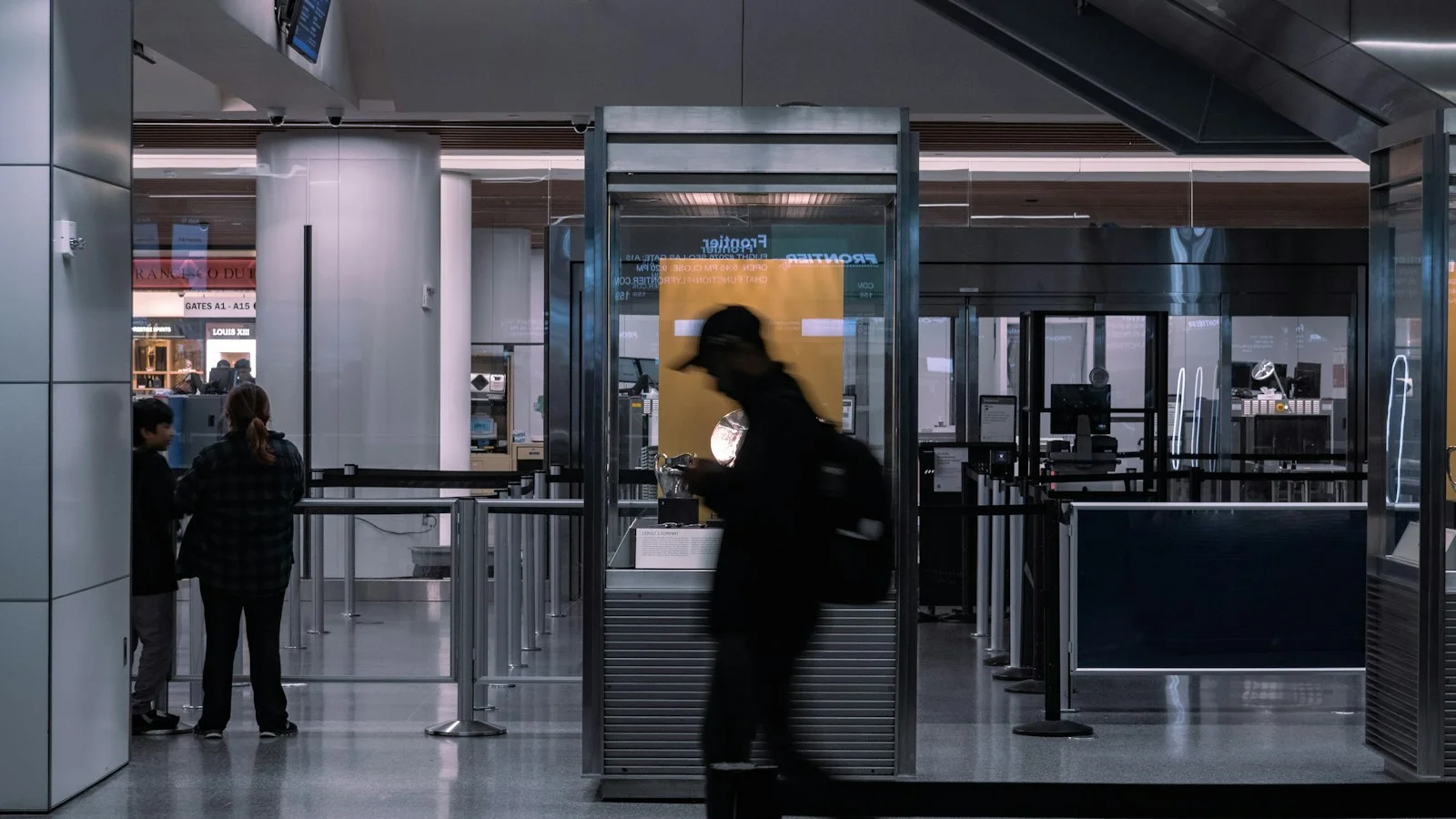
Every passenger who flies out of an Australian security controlled airport passes through a screening point, and every one of those checkpoints is staffed by accredited aviation screening officers. It's a role with real responsibility, steady demand at airports across the country, a nationally recognised qualification built in, and a clear pathway into supervision and broader aviation security careers.
If you're applying, your resume needs to show two things: that you'll be thorough and calm on the checkpoint, and that you meet, or can meet, the qualification and clearance requirements. This guide covers who hires screeners, what the job involves, the Certificate II and accreditation, how recruitment works, and how to write a resume that gets you through the first cut.
Who Employs Screening Officers
Screening at Australian airports is mostly delivered by specialist security companies under contract to the airport operator or airlines. The two biggest are Certis and ISS, and you'll see both advertising regularly for Aviation Screening Officers or Aviation Protection Officers, the same job under different names. Contracts change from time to time, so check who runs screening at the airport you want to work at before you apply, and use that company's name and job title in your cover letter.
There's also screening work beyond the passenger checkpoint. Checked baggage screening happens behind the scenes, and air cargo screening is done at freight facilities. Cargo roles are often advertised as Freight Aviation Protection Officer and use a cargo-specific version of the Certificate II. If you prefer a less public-facing environment, they're worth a look.
What the Job Involves
Screeners rotate through positions during a shift, both to share the workload and to keep everyone sharp:
- Divest: helping passengers prepare their bags and belongings for the X-ray, and explaining what has to come out.
- X-ray operator: interpreting images of cabin bags to identify weapons, prohibited items and threats. Many airports now use CT scanners that produce 3D images.
- Walk-through metal detector and body scanner: screening passengers and resolving alarms.
- Search and explosive trace detection (ETD): physically searching bags and people, and swabbing for explosive traces.
- Checked baggage screening: reviewing images of hold bags flagged by automated systems.
- Staff and vehicle screening: screening airport workers and vehicles entering airside areas.
The work is a mix of intense concentration and constant interaction with the public. You might spend 20 minutes on the X-ray, then rotate to searching bags while explaining calmly to a frustrated passenger why their oversized sunscreen can't go through.
The Requirements Recruiters Check First
Under the Aviation Transport Security (Screening Officer Requirements) Determination 2025, aviation screening officers normally need a Certificate II in Transport Security Protection, with approved equivalents and specified legacy alternatives. New officers also need role-specific on-the-job training and relevant accreditation testing. You'll also need to pass the background check for an ASIC, and most employers require medical, drug and alcohol testing. Many employers put new starters through the certificate as part of their training, so if you don't hold it yet, say you're willing to complete it.
Your resume should make your status on each of these clear in the first third of the page:
- Certificate II in Transport Security Protection: held, in progress, or willing to complete
- Screener accreditation, if you're already working as a screener
- ASIC: current, or eligible (see our ASIC guide)
- State security licence, if you hold one
- First aid and a national police check
- Full availability for a 24/7 rotating roster
The Certificate II and Accreditation Explained
The Certificate II in Transport Security Protection covers screening procedures, operating screening equipment, identifying weapons, explosives and prohibited items, and dealing with people in a security setting. Officers first engaged or employed from 1 July 2022 must complete at least 40 hours of role-specific on-the-job training. The requirement also applies to certain officers returning after more than 24 months away.
Who pays for the certificate varies. Some employers fund it in full, others offer it at a discounted price through their own training organisation, and some ads ask you to hold it already. Read the ad carefully. If you've already paid for and completed it, make that the very first thing a recruiter sees, because it saves them time and money.
What Makes a Strong Screener
- Attention to detail: spotting a prohibited item in a cluttered X-ray image.
- Consistency: applying the same procedures to every passenger, every time, including the ones in a hurry.
- Calm, professional communication: with stressed, rushed or non-compliant passengers.
- Integrity: following procedure when nobody is watching. Screeners are covertly tested.
- Reliability on shift: checkpoints open before the first flight and close after the last.
Every bullet point on your resume should show one of these.
Example Bullet Points
Experienced screener:
- Screen up to 1,500 passengers per shift across X-ray, walk-through metal detector and body scanner positions.
- Interpret X-ray and CT images to identify weapons, prohibited items and LAGs; conduct physical and explosive trace detection searches.
- Manage non-compliant passengers professionally and escalate to supervisors and police when required.
- Consistently meet accreditation, image interpretation and covert testing requirements.
Entry level (retail security or customer service background):
- Monitor people and CCTV to identify suspicious behaviour and prevent theft.
- Conduct bag checks politely and consistently, following company and legal procedures.
- Write clear, accurate incident reports and liaise with police when required.
- Serve up to 300 customers per shift in a busy store while keeping queues moving.
Supervisor:
- Supervise screening points across two terminals, deploying staff to meet passenger flows and queue-time targets.
- Ensure compliance with the Aviation Transport Security Regulations and the airport's Transport Security Program.
- Deliver on-the-job training and assessments for new screeners.
- Manage incidents and liaise with the Australian Federal Police, airport operations and airlines.
Backgrounds That Work Well
You don't need security experience to become a screener. Recruiters regularly hire from retail, hospitality, call centres, customer service and the Defence Force. What they want to see is evidence of three things: you follow procedures exactly, you stay polite under pressure, and you notice details others miss. A cashier who balances a till to the cent, a barista who handles a 7 am rush without losing their cool, or a warehouse picker with near-perfect accuracy all have relevant stories. Put them on the page.
Getting Ready for Image Interpretation
Reading X-ray images is the skill that separates good screeners from the rest, and it's tested regularly throughout your career, not just in training. Images use colour to show material density: organic materials, inorganic materials and metals each appear differently, and threats are often hidden among everyday items like laptops, chargers and toiletries. You'll learn the specifics in training, but you can prepare by practising focused visual tasks, getting comfortable looking at a cluttered scene and methodically scanning every part of it, and resisting the urge to rush. If you've done anything that relies on careful visual checking, such as quality control, inventory audits or proofreading, put it on your resume.
Regional and Smaller Airports
Screening isn't only a capital-city job. Security controlled regional airports also have screening points, often with smaller teams where screeners cover a wider mix of positions and get to know the regular passengers and airline staff. Regional roles can be a good way in if the big airports are competitive, and the qualification and accreditation you earn are recognised wherever you go next.
How Recruitment Usually Works
- Online application: resume and screening questions about availability, right to work and ASIC eligibility.
- Assessment: some employers use online tests or an assessment session to check attention to detail, visual interpretation and judgement, followed by an interview.
- Pre-employment checks: medical, drug and alcohol testing, reference checks and your ASIC application.
- Training: the Certificate II (if you don't hold it), then on-the-job training and accreditation testing.
The ASIC background check looks at your criminal history, so if anything there might be an issue, read up on it before you apply rather than finding out halfway through training.
Interview Questions to Prepare For
- "Tell us about a time you had to enforce a rule someone didn't like." Show you can be firm and respectful at the same time.
- "Describe a time you noticed something others missed." This is the core skill of the job. Have a specific example.
- "How would you handle a passenger who refuses to be searched?" They want to hear that you'd stay calm, explain the options, follow procedure and call a supervisor, not argue.
- "How do you stay focused on a repetitive task?" Screening can be monotonous, and complacency is the biggest risk. Talk about routines and taking rotations seriously.
Pay, Rosters and Progression
Most screening roles are casual or part-time to start, on a rotating roster that covers early mornings, nights, weekends and public holidays. Pay depends on the employer, the airport and the enterprise agreement, and some casual roles are advertised at a flat hourly rate that includes loadings. Check the ad for the details. From screener, the usual path is senior screener or team leader, then screening supervisor and screening manager. The ASIC, security knowledge and airport experience you build also open doors to airport operations, security compliance and broader aviation security roles.
Format Tips
One page, A4, PDF, with a simple layout that works in online application systems. Our guide to ATS-friendly aviation resumes explains why. List the screening equipment you've used (X-ray including CT, walk-through metal detectors, body scanners, ETD, hand-held detectors) in a short skills section so it's quick for recruiters to scan.
Cover Letter Tips
Keep it short and specific. Name the airport and the company, confirm your certificate status and roster availability in the first paragraph, and give one example that shows attention to detail and one that shows calm communication. Our aviation cover letter guide has the full structure.
Keywords to Include
Aviation screening officer, aviation protection officer, Certificate II in Transport Security Protection, screener accreditation, X-ray image interpretation, CT screening, explosive trace detection, body scanner, prohibited items, passenger screening, checked baggage screening, ASIC, Aviation Transport Security Act, customer service, shift work.
Mistakes to Avoid
- Hiding your certificate status. If you hold the Cert II, put it at the top.
- Sounding aggressive. Good screeners are firm but respectful. Your examples should show both.
- Ignoring customer service. Screening is a public-facing job. Hospitality and retail experience counts.
- Vague availability. If you can't work early mornings, it's better to say so than to drop out of the roster later.
Prefer to start from a template? Our security screening resume templates include versions for accredited screeners, first-time applicants and screening supervisors, with qualification and equipment sections ready to fill in.
Frequently Asked Questions
Do I need the Certificate II before I apply?
Not always. Many screening providers train new starters through the certificate. Check the job ad and state your willingness to complete it if you don't hold it yet.
Who pays for the Certificate II?
It depends on the employer. Some cover the full cost, some offer it at a discount through their own training organisation, and some prefer applicants who already hold it.
Can I work as a screener with a criminal record?
It depends on the offence. You'll need to pass the ASIC background check, which assesses specific aviation-security-relevant offences. Our ASIC guide explains how it works.
Do I need a state security licence?
Generally not for aviation screening, but some ads list one as desirable. If you have one, include it.
Is screening a good pathway into other aviation jobs?
Yes. Screening builds security knowledge, an ASIC and airport experience, all useful for supervisory, airport operations and broader aviation security roles. See our airport operations resume guide if that's where you're heading.
Ready to Apply?
Browse aviation security and screening jobs on Aviation Careers. If you'd like the structure done for you, our security screening resume and cover letter templates are available.
Further Reading
→ How to Get an ASIC Card in Australia
→ Airport Customer Service & Check-In Agent Resume Guide
→ Aviation Jobs Salary Guide 2026
→ How to Write an Aviation Cover Letter That Actually Gets Read
Screening requirements are set by the Department of Home Affairs and may change. Check current requirements with your employer before applying.
Last updated: November 2026
Related posts

How aviation employers may use applicant tracking systems, and how to make your resume easier for both software and recruiters to read.

How to write an aviation safety and compliance resume in Australia, including moving across from pilot, engineering or cabin crew roles.

How to write a resume and cover letter for Aviation Rescue Fire Fighting recruit intakes, transfers and Station Officer roles in Australia.