Updated by
Duke is the founder of Aviation Careers. He's Primarily an Airline Pilot in Australia with experience in Charter and Aeromedical operations. He is passionate about improving accessibility for younger generations in aviation and increasing safety throughout the industry.
When people picture aviation careers, they typically think of pilots, cabin crew, or engineers. But one of the most critical — and physically demanding — roles keeping Australia's skies safe is one that rarely gets the attention it deserves: Aviation Rescue Fire Fighting (ARFF).
Whether you've got a background in emergency services, a passion for aviation, or you're simply looking for a hands-on career that truly matters, ARFF could be your runway into the industry. This guide breaks down everything you need to know — the role, the responsibilities, the qualifications, and how to launch your career.
What Is Aviation Rescue Fire Fighting (ARFF)?
Aviation Rescue Fire Fighting — commonly referred to as ARFF — is a specialised emergency response service dedicated exclusively to the airport environment. Unlike metropolitan or rural fire services, ARFF personnel are trained specifically for aircraft emergencies: fuel fires, engine failures, crash landings, hazardous material incidents, and mass-casualty evacuations.
In Australia, the ARFF service is operated by Airservices Australia, a government-owned corporation responsible for the safety and efficiency of civil aviation. Their ARFF service is one of the largest in the world, with more than 900 operational and support personnel based at 27 airports across the country — from Sydney and Melbourne to remote outposts in regional Australia.
What Does an Aviation Rescue Fire Fighter Actually Do?
This is where ARFF separates itself from every other fire service. At its core, the role is built around one critical standard: ARFF crews must reach any point on an airport runway within three minutes of receiving an alert. That's not a guideline — it's a compliance requirement under international aviation regulations set by the International Civil Aviation Organisation (ICAO) and enforced domestically by the Civil Aviation Safety Authority (CASA).
Every element of an ARFF firefighter's day — their training schedules, vehicle placement, shift structure, and physical preparation — is designed around maintaining that three-minute response window, around the clock, 365 days a year.
Day-to-Day Responsibilities
The role is far broader than fighting fires. The majority of callouts for most ARFF personnel fall into emergency medical response — first aid, CPR, and trauma support for passengers and airport staff. Beyond that, ARFF firefighters are called on for:
Aircraft crash and emergency landings — full foam deployment and crash rescue
Engine and brake fires — rapid suppression before an aircraft reaches the terminal
Fuel leak management — hazardous material containment on the apron
Structural fire support — responding to terminal or hangar fires within the airport boundary
Mass-casualty incident management — coordinating with paramedics and emergency services
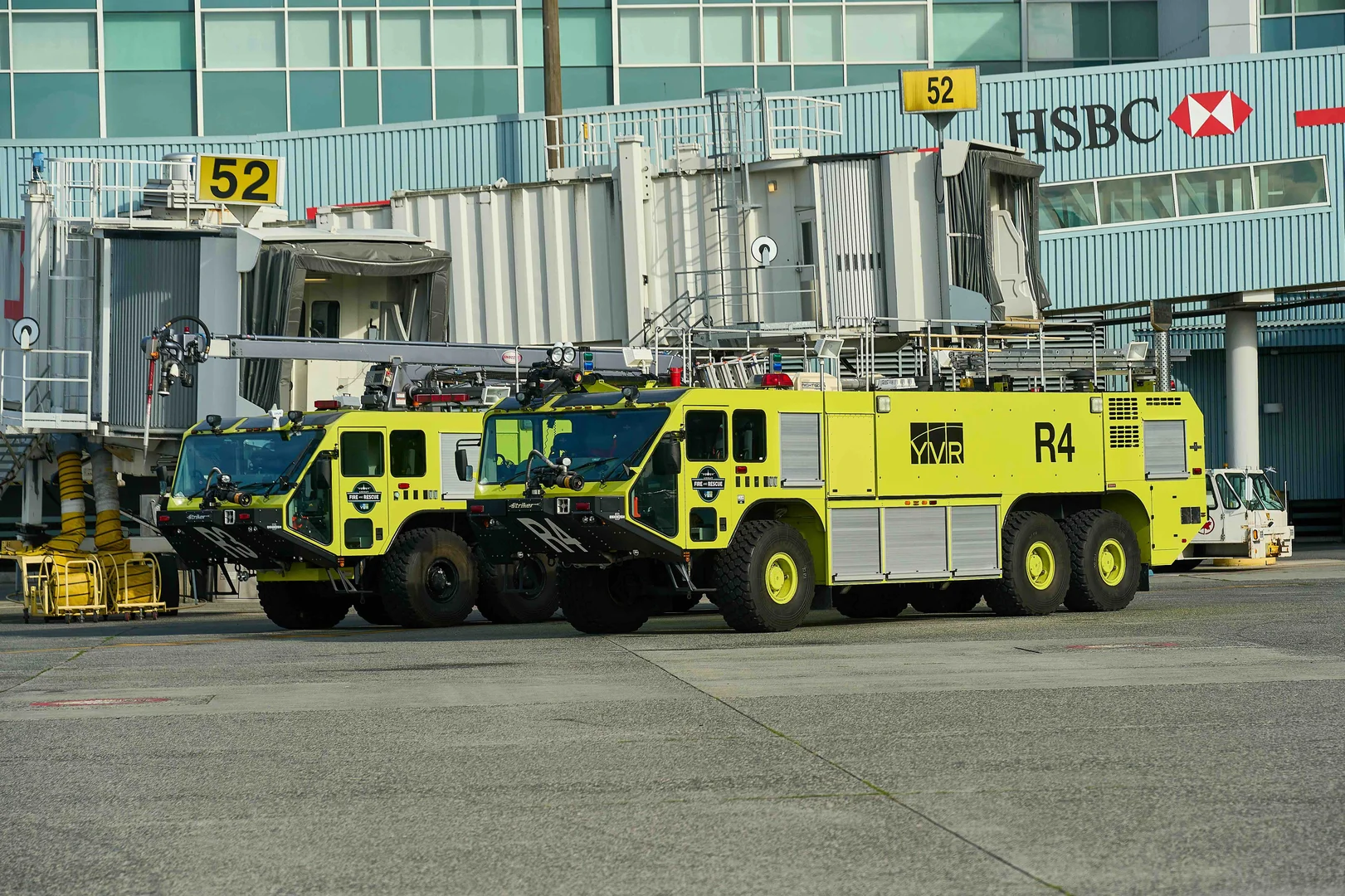
Vehicle operations — driving and operating Ultra-Large Fire Vehicles (ULFVs), which carry thousands of litres of foam or water and are equipped with high-reach turrets, infrared cameras, and crash rescue tools
Training and drill participation — mandatory ongoing physical and technical training built into every shift
The Airport Environment
ARFF is an entirely self-contained world. Stations are located on or beside the runway. You'll work in a close-knit team under a shift-based roster, with structured downtime between alerts, access to on-site gyms, and the expertise of qualified physical training instructors. Every fire station is equipped with fitness facilities precisely because the job demands a consistently high standard of physical capability.
ARFF vs. Other Fire Services: Key Differences
If you're coming from a background in metropolitan or rural firefighting, it's worth understanding what makes ARFF distinct:
ARFF | General Fire Service | |
|---|---|---|
Primary hazard | Aircraft fires, fuel, hydraulics | Structural and bushfire |
Response time standard | 3 minutes to any runway point | Variable by geography |
Vehicles | Ultra-Large Fire Vehicles (ULFVs) | Pumpers, tankers, aerials |
Jurisdiction | Airport boundary only | Broad geographic area |
Medical response | Majority of callouts | Varies by service |
Regulatory framework | CASA / ICAO | State-based legislation |
The frequency of actual fire incidents in ARFF is significantly lower than in urban services — but when they occur, the stakes are extraordinarily high. Preparedness, technical precision, and physical readiness define the role.
Qualifications & Education Required
Entry-Level: The Recruit Pathway
Airservices Australia recruits ARFF personnel through structured Recruit Courses (RCs), typically running one to two times per year. These courses are based at their training facility in Melbourne and are face-to-face and intensive.
There are no mandatory prior firefighting qualifications required to apply as a new recruit. However, applicants must meet the following baseline requirements:
Australian citizenship or permanent residency
Australian driver's licence (minimum car; heavy vehicle licence is an advantage)
Senior First Aid Certificate (or willingness to obtain one prior to commencement)
National Police Clearance
Working with Children Check
Successful completion of the Physical Aptitude Test (PAT)
Note: Airservices Australia updated its PAT standards on 16 May 2025. The revised assessment is designed specifically to measure physical suitability for the ARFF Recruit Course and reflects the genuine demands of the role.
The Recruit Course
Once accepted, new recruits undergo a structured Recruit Course that covers:
Aircraft and aerodrome familiarisation
ARFF strategy and tactics
Vehicle operations (including ULFVs)
Firefighting systems, equipment, and communications
Emergency medical response
ARFF governance and regulatory frameworks
On successful completion of the Recruit Course, personnel receive classification as a Fire Fighter.
Training doesn't stop there. Firefighters continue developing skills at their station and undertake further assessment to obtain:
PUA30622 – Certificate III in Public Safety (Firefighting and Emergency Operations)
This is a nationally recognised qualification aligned to the Australian Qualifications Framework (AQF) and the Public Safety Training Package.
Experienced Firefighter Pathway
If you're already a qualified firefighter from a state, territory, or private emergency services background, Airservices Australia offers a condensed pathway to the Leading Fire Fighter classification. This training includes aerodrome and aircraft familiarisation, ARFF-specific vehicle operations, systems, communications, and strategy — acknowledging the skills you already bring while building the specialist expertise the aviation environment demands.
Key ARFF training units you may encounter across the sector include:
PUAFIR305 – Respond to Aviation Incidents (General)
PUAFIR205B – Respond to Aviation Incidents (Specialist)
PUA20622 – Certificate II in Public Safety (Firefighting and Emergency Operations)
These units are offered by Registered Training Organisations (RTOs) operating in the public safety sector, including Fire and Safety Australia (RTO 22250), which delivers live-fire ARFF training at academies in Brisbane and Perth.
Physical Requirements: What You Need to Prepare For
Physical fitness is non-negotiable in ARFF. The role demands sustained high-intensity output — operating in full Personal Protective Equipment (PPE), carrying heavy hose lines, deploying crash rescue equipment, and maintaining operational readiness across a full shift.
The Physical Aptitude Test (PAT) is the gateway to recruitment and includes assessments specifically designed to replicate the physical demands of the job. Airservices Australia recommends attempting no more than two PATs within a three-month period to allow adequate time for targeted training between attempts.
Key physical attributes to develop include:
Cardiovascular endurance — sustained aerobic output under load
Upper body and grip strength — hose operation, equipment deployment
Lower body power — mobility in PPE across varied terrain
Core stability — vehicle operations and rescue procedures
If you're working toward the PAT, treat your preparation like an athlete preparing for competition. Structure your training, get professional guidance where possible, and allow adequate recovery.
Where Can ARFF Firefighters Work in Australia?
Airservices Australia's ARFF service operates at 27 certificated airports, including:
Sydney (Kingsford Smith)
Melbourne (Tullamarine)
Brisbane
Perth
Adelaide
Cairns
Darwin
Gold Coast
Hobart
Canberra
And regional airports including Karratha, Broome, Townsville, and more
Beyond Airservices Australia, ARFF-trained personnel are increasingly in demand across the mining, oil and gas, and resources sectors, where remote airstrips at FIFO (Fly-In Fly-Out) operations require dedicated aviation rescue capability. Companies like Fire and Safety Australia operate contracted ARFF services at remote sites including Santos Moomba and Santos Ballera — opening additional career pathways outside of the traditional airport setting.
Salary Expectations
ARFF firefighters employed by Airservices Australia are covered under an enterprise agreement, with competitive salary structures reflective of shift work, ongoing training obligations, and the critical nature of the role.
Entry-level Fire Fighters typically earn in the range of $70,000–$85,000 base, with penalty rates, overtime, and allowances increasing total compensation meaningfully. Leading Fire Fighters and Station Officers command higher base salaries, with senior roles in the $100,000+ range.
For a broader look at salary benchmarks across aviation roles, see our Aviation Jobs Salary Guide 2026.
Is ARFF Right for You?
ARFF attracts people who want the intensity and camaraderie of a fire service career combined with the unique environment of aviation. It's a role that suits people who:
Thrive in structured team environments under pressure
Have a high baseline of physical fitness and are committed to maintaining it
Want meaningful emergency response work
Are drawn to aviation but don't necessarily want to fly
Value job security, career progression, and a structured training pathway
If you've been working in a related field — paramedics, defence, general fire services, or even aviation ground operations — your background could give you a genuine edge in the recruitment process.
How to Apply
Recruitment for ARFF Recruit Courses is advertised by Airservices Australia. Upcoming intake dates for 2026 include:
RC106: January 2026
RC107: April 2026
RC108: June 2026
RC109: September 2026
Dates are subject to change based on operational requirements.
Applications are submitted fresh for each intake — previous application results do not carry over. If you're placed in a talent pool, Airservices Australia will contact you within 12 months to discuss location preferences.
If you're unsuccessful at the Assessment Centre stage, you'll need to wait 12 months before reapplying — so make sure your application and physical preparation are at their best before you submit.
Further Reading on Aviation Careers
ARFF is just one of the many rewarding careers in Australian aviation. If you're exploring your options, dive deeper with these guides:
🔗 Aviation Jobs Salary Guide 2026: What You Can Earn in Australian Aviation
🔗 Aircraft Maintenance Engineer Career Guide: Qualifications, Salary & Jobs in Australia
🔗 Air Traffic Controller Salary in Australia: What You'll Earn at Every Level (2026)
🔗 Your Complete Guide to Aviation Medical Certificates in Australia
🔗 The Definitive Guide to Pilot Recruitment in Australia 2026
Ready to Take the Next Step?
Whether you're applying to your first ARFF Recruit Course, transitioning from another emergency service, or looking for ARFF roles in the resources sector, Aviation Careers is Australia's dedicated aviation job platform — connecting professionals with employers across every corner of the industry.
Find ARFF, ground operations, aviation engineering, pilot, and support roles listed by Australia's leading aviation employers — from Airservices Australia to regional operators and beyond.
The runway is clear. Your aviation career starts here.
Sources: Airservices Australia, Civil Aviation Safety Authority (CASA), Fire and Safety Australia (RTO 22250), Fire Recruitment Australia. Recruit course dates and PAT standards are current as of publication and subject to change — always refer to the Airservices Australia ARFF careers page for the latest information.