Updated by
Duke is the founder of Aviation Careers. He's Primarily an Airline Pilot in Australia with experience in Charter and Aeromedical operations. He is passionate about improving accessibility for younger generations in aviation and increasing safety throughout the industry.
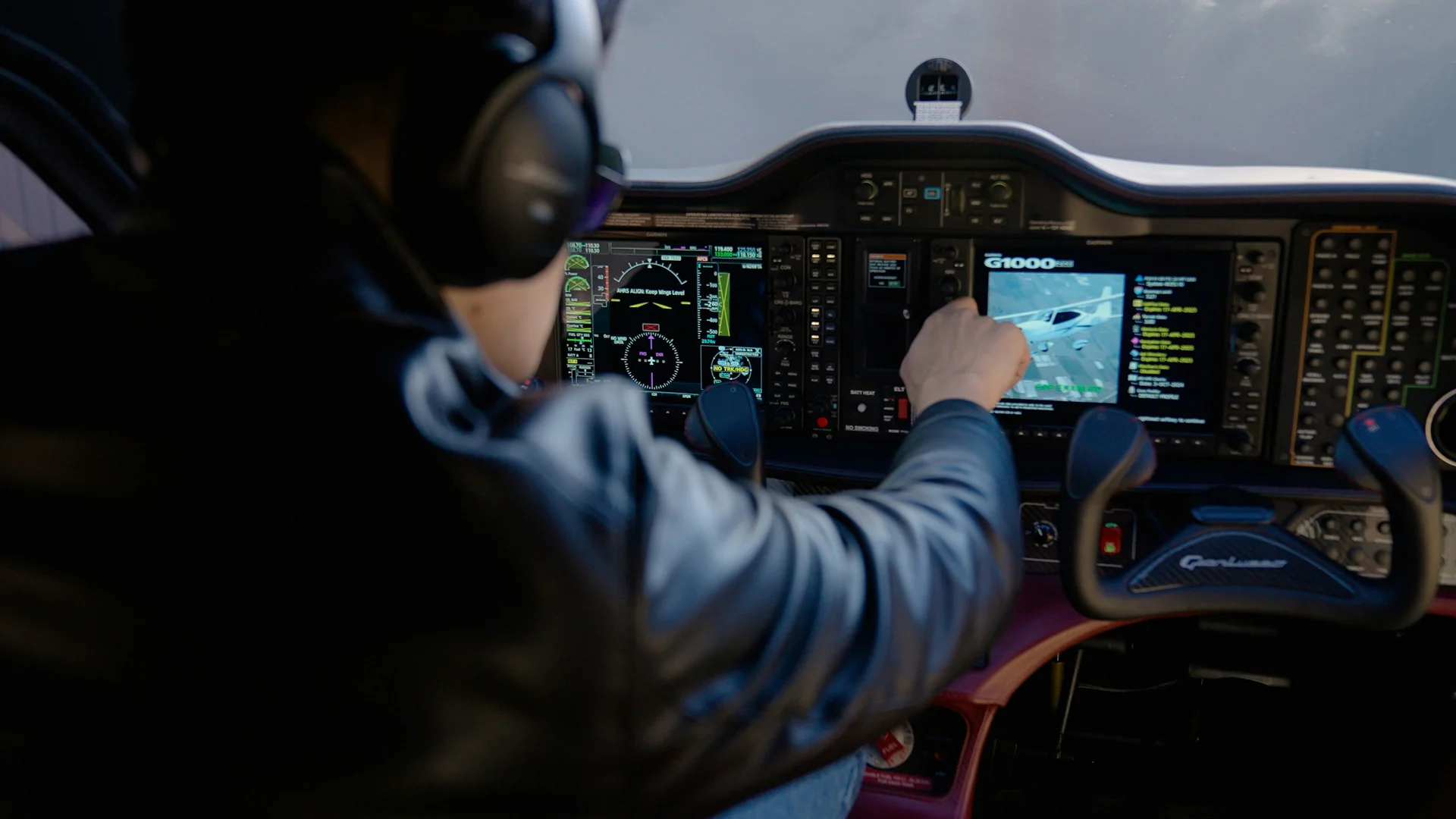
So you want to become a pilot. You've watched the YouTube videos, maybe taken a discovery flight, and now you're staring down the most important question nobody seems to give you a straight answer on: how much is this actually going to cost?
The answer isn't simple — but it is knowable. This guide breaks down the full picture, from your first lesson to your first airline job, with real numbers you can use to plan your future. No fluff, no vague ranges designed to get you to call a sales line.
Let's get into it.
The Big Picture: Total Cost Summary
Before we dive into the detail, here's the honest top-line view:
Pathway | Estimated Total Cost (2026) |
|---|---|
Modular (PPL → CPL) | $80,000 – $130,000 |
Integrated (Zero to CPL in one program) | $100,000 – $160,000 |
CPL + Multi-Engine + ATPL Theory | $110,000 – $175,000 |
CPL + ME + ATPL + Type Rating (airline-ready) | $130,000 – $200,000+ |
These are realistic totals based on current Australian flight school pricing. Where you land in these ranges depends on your school, location, how quickly you fly, and a handful of costs most guides never mention.
Step 1: The Recreational Pilot Licence (RPL) or Student Pilot
Many students start here before committing to a full commercial pathway. An RPL allows you to fly solo in simple aircraft under visual flight rules.
Estimated cost: $5,000 – $12,000
The variance is large because it depends almost entirely on how many hours you need to go solo and reach licence standard. The national average solo is around 15–20 hours, though some students take longer.
You're not required to get an RPL before your PPL — many schools fold the early training straight into the Private Pilot Licence pathway. It's worth asking your school which route makes more financial sense.
Step 2: Private Pilot Licence (PPL)
The PPL is the foundation of your career training. It requires a minimum of 40 hours of flight time (though most students complete it in 50–65 hours in practice), plus ground theory exams.
Estimated cost: $15,000 – $30,000
Key components that make up this cost:
Dual flight instruction (approx. $350–$500/hr depending on aircraft and school)
Solo flight time (approx. $250–$380/hr — aircraft hire only)
Ground school or self-study materials ($500–$2,000)
CASA PPL flight test fee (approx. $950–$1,200 including examiner)
Headset ($300 for a basic model to $1,200+ for a quality David Clark or Bose A20)
Step 3: The Commercial Pilot Licence (CPL)
This is the big one. The CPL requires a minimum of 150 hours total time under the new CASA rules (or 200 hours under older pathways), including specific requirements for cross-country, night flying, and instrument time.
Estimated cost: $45,000 – $85,000 (on top of your PPL costs)
This stage is where many students underestimate the budget required. Here's why costs blow out:
You're flying more complex, faster aircraft — typically a PA28-161 Warrior or Cessna 172 steps up to a PA28 Arrow or similar complex aircraft types like C206/C210 for CPL training
More hours of dual instruction are required in the later stages
Navigation exercises burn more fuel and aircraft time
Some schools bundle CPL training with instrument ratings; others don't
Step 4: Instrument Rating (IR) and Multi-Engine Rating (ME)
Airlines require both. These are typically completed alongside or immediately after your CPL.
Instrument Rating: $12,000 – $25,000 Multi-Engine Rating: $8,000 – $18,000
Some integrated schools include these in their CPL package price. If you're going modular, treat these as separate line items in your budget.
Step 5: ATPL Theory (Frozen ATPL)
The Air Transport Pilot Licence theory exams are 7 subjects you'll need to pass to be competitive for airline cadet programs and regional airline jobs. These are done via self-study combined with a ground school provider.
Estimated cost: $4,000 – $10,000
This includes:
ATPL ground school course fees (e.g., Aviationexam, Ground School Australia, or in-person providers like AFT ) — $2,000–$6,000
CASA exam fees: approximately $300–$400 per subject × 7 subjects = $2,100–$2,800
Study materials, textbooks, and question banks — $500–$1,500
Many students complete ATPL theory while building hours or during CPL training to save time.
CASA Medical Certificates: The Cost People Forget
To fly commercially, you need a Class 1 Medical Certificate from CASA. This is non-negotiable — and it's worth getting early, before you invest heavily in training.
Class 2 Medical (required for PPL): $250–$450 Class 1 Medical (required for CPL and airline work): $350–$600
These are annual or biennial costs depending on your age. Budget for one per year, and note that if CASA refers you to a specialist, those fees are on top.
Critical tip: Get your Class 1 medical done before you spend a dollar on flight training. Pre-existing medical conditions, including vision issues, mental health history, and cardiac conditions, can affect your eligibility. CASA's DAME (Designated Aviation Medical Examiner) network across Australia can advise you.
CASA Exam and Licensing Fees
Beyond the medical, CASA charges fees for tests and licence issuance that add up across your training.
Item | Approximate Cost |
|---|---|
PPL flight test | $950–$1,200 |
CPL flight test | $1,400–$1,800 |
Instrument Rating flight test | $1,200–$1,600 |
Multi-Engine Rating test | $900–$1,200 |
ATPL theory exams (per subject) | $170–$220 |
Licence issue / endorsement | $100–$200 per licence |
Budget approximately $8,000–$12,000 in CASA fees across your entire training journey.
The Hidden Costs Nobody Warns You About
This is the section that separates useful guides from useless ones. Here are the costs that blindside students every year:
Accommodation and living expenses (if training regionally) Many of Australia's best-value flight schools are in regional areas — think Tamworth, Bankstown, Parafield, or Jandakot. If you're relocating from another city, you'll need to budget for rent, food, and transport. Add $15,000–$30,000 per year for regional living costs depending on your lifestyle.
Training delays and weather Australia's weather is generally excellent for flying, but school is never linear. Training delays mean extended time away from home, extended rental costs, and additional lesson repetitions. Budget a 20% buffer on your flight training estimate.
Chart subscriptions and navigation tools AvPlan EFB or OzRunways subscriptions run $150–$350/year. You'll also need current charts — budget $300–$500 for initial purchases.
Uniform and PPE Some schools require a uniform from day one. Good quality sunglasses run $150–$400. Factor in $500–$1,000 here.
Aircraft ground time and booking fees Some schools charge minimum booking blocks. If you book two hours and only fly 1.5 due to weather, you may be charged the full block. Ask your school's policy upfront.
Recency and currency flying Once licensed, you need to maintain currency. If you're between jobs or building hours, budget $500–$1,500/month for currency flying.
Failed test attempts Nobody plans to fail, but it happens. A CPL re-test costs another $1,400–$1,800 on top of the additional prep flying. Have a contingency in your budget.
School-by-School Cost Breakdown: Integrated Programs in 2026
One of the most useful things you can do before committing is compare the actual cost structures of specific integrated schools. Here's what we found for four of Australia's leading integrated providers, based on publicly available fee schedules and official documentation.
UNSW School of Aviation (Bankstown Airport, Sydney)
Program: Bachelor of Aviation (Flying) — 3 years full-time
UNSW is the only university-based flying program in Australia that integrates a full bachelor's degree with professional pilot licensing. The anticipated standard cost of flight training to obtain the minimum of a CPL and Instrument Rating — Multi Engine Aeroplane in 2025 was $150,000. That figure is reviewed annually and has trended upward.
This is the flight training component only. The academic tuition is a separate cost covered via a Commonwealth Supported Place (HECS), meaning domestic students can defer it through the HELP loan system.
Published direct fees cover flight training hours, pre-flight briefings, flight test attempts, theory exam attempts, licence issue and security checks, uniform, regulatory documents, textbooks, and navigation equipment. If you need more hours than the syllabus allows, additional costs apply.
Training is conducted at UNSW's Flight Operations Unit at Bankstown Airport, using Diamond DA40 and Piper PA44 aircraft with Garmin 1000 avionics. The program also includes approximately 30 hours of simulator training and culminates in a CPL with Multi-Engine Command Instrument Rating and a Frozen ATPL.
Cost Component | Estimated Amount |
|---|---|
Flight training (CPL + ME IR) | ~$150,000 (2025 indicative) |
Academic tuition (HECS-deferrable) | ~$12,000–$16,000/yr × 3 yrs |
Total estimated training costs (domestic) | ~$186,000–$198,000 |
What UNSW gives you that pure flight schools don't: A full bachelor's degree recognised internationally, direct airline industry connections through the AIPA Pilot Mentor Program, and the academic underpinning that some major airline cadet programs actively prefer. UNSW is also the highest-ranked university globally with a standalone aviation school.
The catch: Entry is competitive — it requires aptitude testing, flight screening, medical clearance, and a strong academic background. Numbers per intake are limited, and the academic workload runs alongside the flying demands.
Basair Aviation College (Bankstown, Sydney + Archerfield, Brisbane)
Program: Diploma of Aviation (CPL) — 10 months full-time, with optional separate MECIR
Established in 1991, Basair is Australia's largest flight college by fleet size, with over 80 aircraft across three campuses. Students without any previous aviation experience graduate as fully qualified commercial pilots within a year — one of the fastest timelines in the country.
The CPL course is structured into 10 Units of Study, each lasting 4 weeks. Students begin with the RPL phase, progress through PPL navigation training, and conclude with four weeks of advanced flying in a Cessna 206 or Piper Arrow, building toward the CPL flight test. A new class starts every four weeks, giving genuine flexibility on entry dates.
Basair is a VET Student Loans (VSL) approved provider, meaning eligible domestic students can defer tuition under the government's income-contingent scheme — one of the school's major practical advantages for students who can't fund training upfront.
Important note on pricing: Basair does not publish its tuition fees publicly. Fees are outlined in a personalised Letter of Offer after application and acceptance. Based on market information and peer school comparisons within the VET sector, the CPL Diploma typically falls in the range of $85,000–$105,000, with the MECIR priced separately.
Cost Component | Estimated Amount |
|---|---|
CPL Diploma tuition | ~$85,000–$105,000 (on application) |
MECIR (separate course) | ~$30,000–$45,000 (on application) |
Uniform (not included in some VSL fees) | ~$350 |
Total estimated training costs (domestic CPL + MECIR) | ~$115,350–$150,350 |
What Basair gives you: Industry-leading speed to CPL, a massive fleet and training operation, VSL financing, and brand recognition with airline recruiters globally.
Things to research carefully: Basair carries mixed reviews in online aviation communities. Prospective students are strongly encouraged to speak with recent graduates, attend a career seminar, and ask specific questions about what falls outside the VSL-covered tuition.
Griffith University Aviation (Nathan Campus, Brisbane + partner flight schools)
Program: Bachelor of Aviation (2 years, academic) + Graduate Diploma of Flight Management (1.5 years, flying)
Griffith runs a two-stage pathway unique in Australian aviation education. The Bachelor of Aviation is an accelerated two-year degree covering aerodynamics, meteorology, aircraft systems, flight operations, navigation, safety management, and human factors. No flying occurs at this stage.
The actual pilot licensing happens through the Graduate Diploma of Flight Management (GDFM), which runs for 1.5 years and is done through Griffith's partner flight schools including Flylink Aviation College at Archerfield, Brisbane. Entry to the GDFM requires passing the Griffith Aviation Pilot Aptitude Assessment, a Class 1 Medical, and an ICAO English language assessment — on top of completing the Bachelor of Aviation.
The GDFM domestic fee is approximately $168,000 total — one of the most specific cost figures available for a university flight training program in Australia.
Cost Component | Estimated Amount |
|---|---|
Bachelor of Aviation (HECS-eligible) | ~$8,000–$11,000/yr × 2 yrs |
Graduate Diploma of Flight Management | ~$168,000 |
Total estimated training costs (domestic) | ~$184,000–$190,000 |
What Griffith gives you: One of Australia's longest-running and most recognised aviation programs, strong airline alumni networks (Qantas, Virgin, Rex, Emirates, Cathay Pacific), the MATES mentoring program connecting students with industry professionals, and the ability to test your fit for aviation before committing to full flight training costs.
The structure trade-off: The two-stage pathway is longer than a single integrated program, but HECS for the academic stage reduces the upfront pressure. Students also gain deep theoretical grounding before touching an aircraft — which has both benefits (safety culture, systems thinking) and drawbacks (delayed time in the cockpit).
Flight Training Adelaide — FTA (Parafield Airport, Adelaide + Wellcamp, Toowoomba)
Program: Diploma of Aviation (CPL) + Diploma of Aviation (MECIR) — two sequential courses
FTA is one of Australia's most established internationally-facing flight schools, founded in 1982. It operates from Parafield Airport in Adelaide and Wellcamp Airport in Toowoomba, Queensland — the latter through the prestigious Qantas Group Pilot Academy partnership. FTA has trained cadets for IndiGo, Cathay Pacific, Skymark Airlines, and the Qantas Group.
Unlike most flight schools, FTA publishes detailed, itemised fee schedules as public PDFs for every intake — making genuine cost comparison possible. Based on the published VET fee schedule for the Parafield campus February 2026 intake:
CPL Diploma — Parafield, February 2026 (CPLA-26-VET59N)
Module | Duration | Tuition Fee |
|---|---|---|
Ground School Phase 1 | 42 days | $8,562 |
Syllabus Module 1 | 28 days | $12,385 |
Syllabus Module 2 | 21 days | $11,601 |
Syllabus Module 3 | 28 days | $21,175 |
Ground School Phase 2 | 42 days | $8,561 |
Syllabus Module 4 | 35 days | $25,435 |
Night Module | 7 days | $4,294 |
Syllabus Module 5 | 49 days | $27,109 |
CPL Total | 252 days | $119,122 |
MECIR — Wellcamp, February 2026 (CIRA-26-QG46)
Module | Duration | Tuition Fee |
|---|---|---|
IREX Ground Theory | 14 days | $3,703 |
Type Endorsement | 21 days | $12,640 |
Instrument Rating | 21 days | $20,218 |
MECIR Total | 56 days | $36,561 |
Combined CPL + MECIR tuition: $155,683
These are published tuition fees only. Non-tuition incidentals — CASA testing fees, ASIC card, medical certificate, and uniform — are additional and detailed in FTA's Student Handbook. Budget approximately $5,000–$10,000 on top.
Cost Component | Amount |
|---|---|
CPL Diploma (tuition) | $119,122 |
MECIR (tuition) | $36,561 |
Incidentals (CASA, ASIC, medical, uniform) | ~$5,000–$10,000 |
Total estimated training costs (domestic) | ~$160,683–$165,683 |
Both the CPL and MECIR are VET Student Loans eligible for domestic students who qualify.
The FTA advantage: Exceptional pricing transparency, a genuinely international training reputation, high throughput (courses commence monthly), and meaningfully lower regional living costs in Adelaide compared to Sydney or Brisbane. For students who want access to the Qantas Academy pipeline or training in a well-resourced regional environment, FTA is a compelling option.
School Comparison at a Glance
School | Duration | Flight Training Cost | Academic Degree? | Location | VSL Eligible? |
|---|---|---|---|---|---|
UNSW | 3 years | ~$150,000 (+ HECS for academics) | Yes | Sydney (Bankstown) | No |
Basair | ~10 months (CPL only) | ~$85,000–$105,000 CPL (on application) | No | Sydney / Brisbane | Yes |
Griffith | 3.5 years total | ~$168,000 (GDFM) + HECS for BAvn | Yes | Brisbane (Archerfield) | Partial |
FTA (Adelaide) | ~12 months (CPL + MECIR) | $155,683 (published) | No | Adelaide / Toowoomba | Yes |
All figures are indicative for 2026. Always obtain a current fee schedule or Letter of Offer before committing. Living costs are estimates and vary significantly by lifestyle.
Integrated vs. Modular: Which Costs Less?
This is one of the most debated questions in Australian aviation training. Here's the honest comparison.
Integrated programs take you from zero to CPL (and often ME/IR) in one structured course, typically 18–24 months. Major providers include Aviator College, Griffith University Aviation, and international programs in the US or Europe.
Pros: Structured, faster completion, often includes simulator hours, cohort support Cons: Higher upfront cost, less flexibility, you can't pause without consequences
Modular training means completing each licence stage separately, often across multiple schools. You do PPL, build hours, then CPL, then IR/ME.
Pros: Spread costs over time, shop around for best value at each stage, work while training Cons: Can take longer (3–5 years), requires strong self-discipline, time-building can be expensive
The cost verdict: Modular can be cheaper by $10,000–$30,000 if managed carefully. However, integrated programs often get you to the job market 12–18 months earlier, which has its own financial value.
Financing Options in Australia
Flight training is expensive, but there are legitimate financing pathways available:
VET Student Loans cover some aviation courses at registered providers — check the provider's eligibility carefully. This is income-contingent repayment, similar to HECS.
Personal loans and aviation-specific finance — some lenders (including Macquarie and specialist aviation finance brokers) offer personal loans for pilot training at rates between 7–14% p.a. depending on your profile.
Flight school payment plans — many schools offer staged payment schedules rather than lump sums. Always ask.
Defence Force options — the RAAF offers fully funded pilot training for selected candidates. Highly competitive, but worth exploring if you meet the criteria.
Airline cadet programs — Qantas, Virgin, and regional carriers periodically run cadet programs with bonded employment, sometimes including partial funding or preferential financing arrangements. Watch the major airline career pages closely.
Scholarships — AOPA Australia, Women in Aviation, and state aviation bodies offer scholarships ranging from $1,000 to $20,000. Apply for everything you're eligible for.
Timeline: From First Lesson to Airline-Ready
Here's a realistic timeline, assuming you're training full-time:
Stage | Duration | Cumulative Flight Hours |
|---|---|---|
RPL / First solo | 3–6 months | 15–25 hrs |
PPL | 6–12 months | 50–70 hrs |
Instrument Rating | 3–6 months | 80–100 hrs |
CPL + Multi-Engine | 6–12 months | 150–200 hrs |
ATPL Theory | Concurrent (12–18 months) | — |
Hour building | 12–24 months | 200–500+ hrs |
First regional job | — | 500–1,500 hrs |
Major domestic airline | — | 1,500–5,000+ hrs |
Realistic total timeline from zero to airline: 5–10 years for most Australians following the modular pathway. Integrated programs can shave this to 2–4 years.
What Are First Jobs Paying? The ROI Picture
Once you have your CPL with IR and ME, and around 500–1,000 hours in the logbook, here's what the Australian market looks like in 2026:
First Officer, regional turboprop (e.g., Rex, Air North, Skytrans): $65,000 – $90,000 p.a. Charter/air work, general aviation: $55,000 – $80,000 p.a. Aerial survey/agricultural aviation: $60,000 – $85,000 p.a. (often with accommodation included) Flight instructor (build hours while earning): $55,000 – $75,000 p.a.
As you progress to major domestic airlines with 3,000+ hours and a command upgrade:
First Officer, major airline: $100,000 – $145,000 p.a. Captain, major airline (10+ years experience): $180,000 – $250,000+ p.a.
The ROI reality: A $150,000 investment in training can deliver a $180,000–$250,000 annual salary 10–15 years into your career. By that measure, it's comparable to a medical degree — with a shorter path to first employment.
Practical Advice Before You Spend a Dollar
1. Get your Class 1 medical first. This is non-negotiable advice. Medical disqualification after spending $50,000 is a preventable tragedy.
2. Do a discovery flight at two or three different schools before committing. You're assessing the school and the instructors, not just whether you enjoy flying.
3. Ask schools for an itemised cost breakdown in writing, not just a headline figure. Compare apples with apples.
4. Visit the CASA website (casa.gov.au) for the current regulatory requirements — training rules do change, and you want to base your planning on current regulations.
5. Talk to people currently working in Australian aviation. Reach out on forums like PPRuNe's Australia/New Zealand section or Australian aviation Facebook groups. The community is more open than you'd expect.
6. Budget for 20% more than the estimate. Almost everyone goes over. The ones who don't are the exception.
Final Word
Becoming a pilot in Australia in 2026 will likely cost you between $150,000 and $200,000+ all-in, including living expenses, if you're starting from scratch and aiming for a commercial career. That's a serious investment — but one that has delivered rewarding, well-paying careers for thousands of Australians.
The pilots who succeed aren't necessarily the ones who had the most money at the start. They're the ones who did their research, planned carefully, found great instructors, and stayed consistent when things got hard.
If that sounds like you, the runway is clear.
Have questions about pilot training costs in Australia? You can find more information HERE. If you found this article useful, share it with someone who's asking the same questions you were.
Disclaimer: Costs listed are indicative based on current market research and are subject to change. Always obtain written quotes from registered training organisations before making financial decisions. AviationCareers.com.au does not receive paid placement from any flight training provider.