Updated by
Duke is the founder of Aviation Careers. He's Primarily an Airline Pilot in Australia with experience in Charter and Aeromedical operations. He is passionate about improving accessibility for younger generations in aviation and increasing safety throughout the industry.
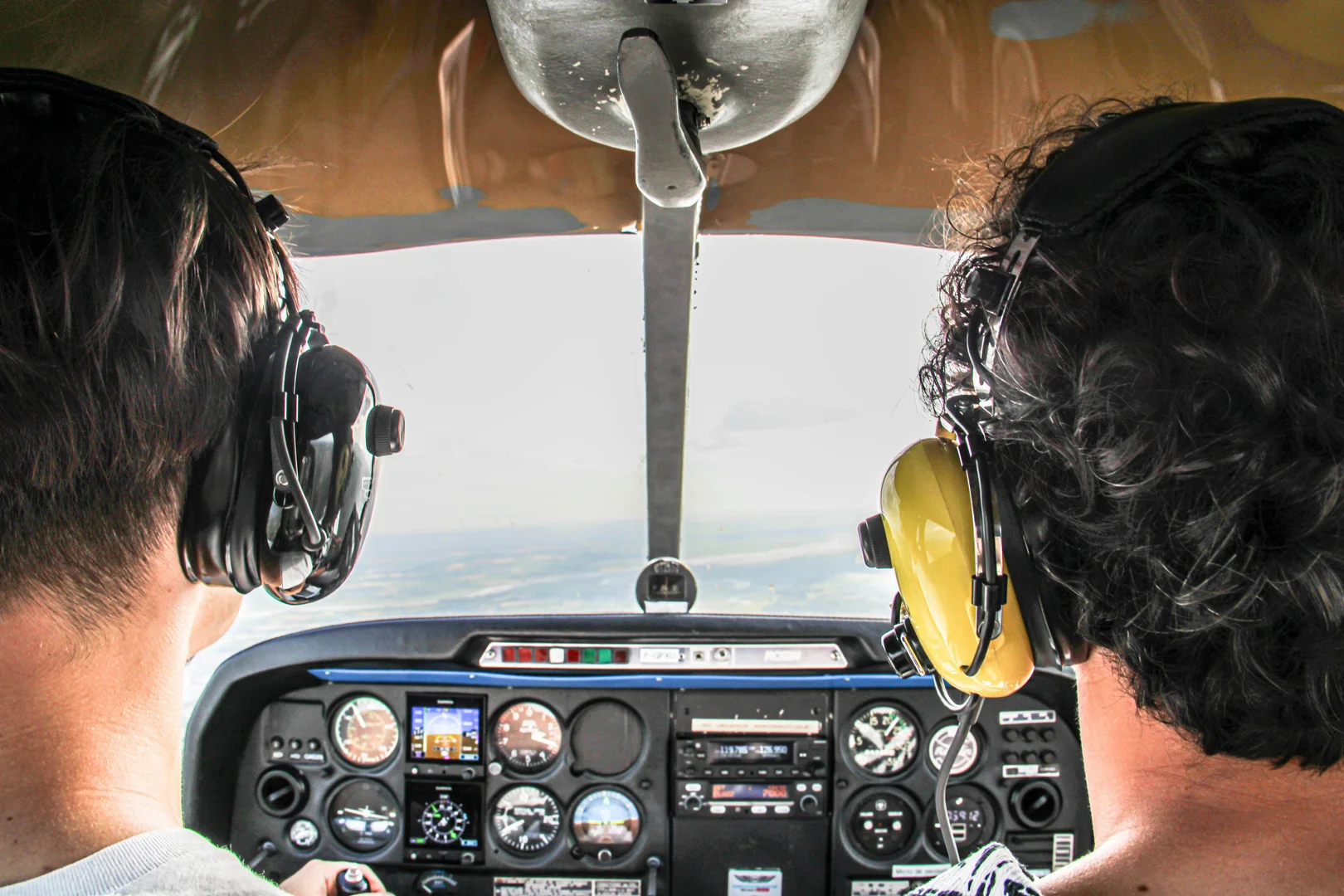
So you want to become a pilot? You’ve looked online to try and find a pathway and have been overwhelmed by the sheer number of flight schools claiming to be the best. Or perhaps a university has told you that a four-year degree is favoured or even required by the airlines? HECS/VET student loans, integrated courses/self-funded, cadetships? do they cost more?
It can become confusing very quickly, but understanding your options can set you on the right pathway to achieve your dream.
The point of this guide is to walk you through the available pathways and help you make an informed decision taking into account your personal circumstances.
Let's break down Pilot training in Australia.
Trial Flight
Have you been flying before? Not as a passenger, but actually taken the controls and felt the freedom as you soar through the air? If not, that’s where you should start. This is a crucial step to understanding if this is the right career for you. The best option here is to head to your local GA (General Aviation) airport and approach a flying club or flight school to ask for a trial flight. This will allow you to take to the air with a qualified flight instructor and experience what it's like to be a pilot.
Medical
To obtain a commercial pilot's license in Australia, you need to hold a valid Class 1 medical. This is to ensure that you’re safe to fly. This is done through CASA (the governing body) as well as a local aviation medical doctor called a DAME. You can read more about applying for and obtaining a medical HERE.
Flight Training
Here’s where it gets complex. There are essentially four pathways you can go down, and the route you take will be determined by your situation. To make this decision, you should ask yourself the following questions:
How much money do I have to put towards training/do I have access to private funds?
How much time can I spare? Do I want to study full-time or part-time? Do I have a couple of years to complete my training, or am I okay doing it over a longer period of time?
Is a university degree important to me?
Once you’ve answered these, you will be able to decide which pathway is best suited for you.
Flight Training Options
Self-Funded
The first pathway is through your local flight school. This is the most flexible option and usually ends up being cheaper overall. The downside is that you will have to pay upfront, and your training will take longer. Think of this as a part-time study option. If you’re working full-time and saving for your training, this could be a good option for you. You will be able to keep working while flying once or twice a week. It is possible to self-fund full-time study if you have the money ready to invest in your training, but be cautious. Some flight schools may offer discounts if you pay in bulk in advance. Do NOT do this. Especially at smaller local schools, if something were to happen to the business, you won’t get your money back.
Integrated Courses
An integrated pilot course in Australia is a fast-track, full-time program combining ground school and flight training for a Commercial Pilot Licence ( CPL ). You will usually need to complete some aptitude testing to be accepted into the course, but this is a good thing. Knowing you have what it takes before taking on loans from the government is in your best interest. Speaking of loans, the integrated courses run on a funding system called VET student loans. Think of HECS but for private colleges. The basic model is that for each component of your training, you will be charged a fee plus a percentage on top. This fee is then indexed in line with inflation.
For those without any financial backing, this is a great option, but it is more expensive. For a complete training course from no experience to job-ready, you’re looking at a magnitude of around $150k AUD. Now that’s a lot of money, but you will pay this back as a percentage of your income, so it’s not too restrictive.
University Degree
Completing a Bachelor of Aviation is your next full-time option. If a degree is something that is important to you, then this is the way to go. What you can expect from this route is essentially the same training as you would receive in an integrated course, but you will need to complete subjects at university to make up the additional points. You will also complete your ATPL subjects, which is a great addition to your training. A Bachelor of Aviation degree typically takes three years and costs around $175k AUD.
Keep in mind that a university degree in Australia doesn’t hold much weight in the aviation industry. So long as you hold a commercial pilot's license and applicable ratings, you’ve got all you need.
Cadetship
Once again, what's a cadetship in general? The cadetship can vary; the general concept is that training is provided by and at the cost of a company that will then employ you as a pilot upon completion of your training. Played right, this is a fast track to the airlines—a shortcut to your goal. But it’s not as straightforward as it seems.
Cadetships come in a couple of forms:
There are partnerships between flight schools and general aviation operators, for instance, White Star Aviation and HM Air/Torres Strait Air. This is essentially an integrated course with the prospect of employment with the partnered operator.
There are also fully self funded options like the Sharp Airlines cadetship. This is one of the longest-standing cadetships in Australia but requires self-funding and, at the time of writing, costs just shy of $200k AUD.
Lastly, there are airline-run cadetships that allow the possibility of entering the aviation industry right at the top. Pay structures vary, with the likes of REX requiring an initial deposit to cover the probationary period. Whereas the Qantas Group cadetship is structured like an integrated course with the payments being covered by VET student loans.
Just keep in mind that nothing in aviation is guaranteed; paying extra money for a cadetship does not mean you will gain employment at the end. Worst case, you will still achieve the same qualifications, and you will be employable in the general aviation market. But it’s not always your golden ticket to the top.
Required Training
Regardless of what training pathway you choose, you will follow the same stepping stones on the way to your Commercial Pilot’s License. Let’s now look at what’s actually involved and how your training choices will shape the trajectory of your career. The flowchart below will give you a basic understanding of the pathway, which I will expand on.
You will start with the Recreational Pilot License (RPL) phase; this includes daily ground theory, instructor briefings, and flying. Through this stage, you will learn the basic concepts of flight, focusing on your handling/air work and circuit work. Through this training, you will achieve your first solo flight without an instructor. The end of this phase is completed with an RPL flight test.
After your RPL, you will start your Private Pilot License (PPL). This stage focuses on your navigation training and allows you to fly an aircraft outside of the local aerodrome area. The completion of this phase is achieved with passes in a PPL theory test and a PPL flight test.
From here, you will commence your Commercial Pilot License (CPL), usually alternating between commercial theory subjects and command flying. The command flying is a great part of your training; some flight schools allow students to go away on "fly-aways," where you and your fellow pilots can take a plane and go on a trip for a week or so. This is a great opportunity if you’re offered it and an amazing learning experience.
The CPL theory subjects consist of the following:
Human Factors
Flight Rules and Air Law
Aircraft General Knowledge (Systems Knowledge)
Meteorology
Performance, Operations, and Flight Planning
Navigation
Aerodynamics
Once you have completed your command flying/theory and commercial training, you will complete your training with a Commercial flight test.
Congratulations! You’re the proud holder of a Commercial Pilot's License. Your next decision is what ratings you want to add to your license to improve your employability.
Straight out of flight school, there are usually two options that people predominantly choose:
The Instructor Rating: This will allow you to work as a flight instructor at flight schools, where you can shape the next generation of budding pilots. This is a great way to build hours, especially if you would prefer to stay close to where you completed your training/home.
Multi-Engine Command Instrument Rating (MECIR): This is the way to go if you want to pursue a charter route. While not required to get a job in the charter world, it will make you much more employable and means you’re qualified for an upgrade to a twin-engine aircraft when the time comes. To get a job in this space, you will usually have to move to a remote location, so keep this in mind when making your decisions.
ATPL Theory Component
While not required, the optional final stage of your training is the ATPL Theory subjects. Similar to your CPL subjects, these are required to obtain an Air Transport Pilot’s License. This will not impact your early career, but you will require it to fly as pilot-in-command in a multi-crew operation like the airlines. Some courses provide these subjects as part of your commercial license training; otherwise, there are organisations that specialise in these subjects, so you can complete them at a later date.
If you want to learn more about the different ratings/endorsements available to you, you can read an expanded breakdown HERE.
Hopefully, now you have a better understanding of your options and the pathways available to you. It can be overwhelming, and there are many decisions to make as you move forward. Once you know which pathway is best suited for you, get into your local Australian flight school, ask questions, and weigh up who is the right provider for you.
Want some more inspiration? Why not look through the extensive Pilot jobs available on Aviationcareers.com.au to see what pathway is right for you. Whether is AG flying, Medical retrieval or the Airlines you're dreaming of, we have a job listing for you.