Updated by
Duke is the founder of Aviation Careers. He's Primarily an Airline Pilot in Australia with experience in Charter and Aeromedical operations. He is passionate about improving accessibility for younger generations in aviation and increasing safety throughout the industry.
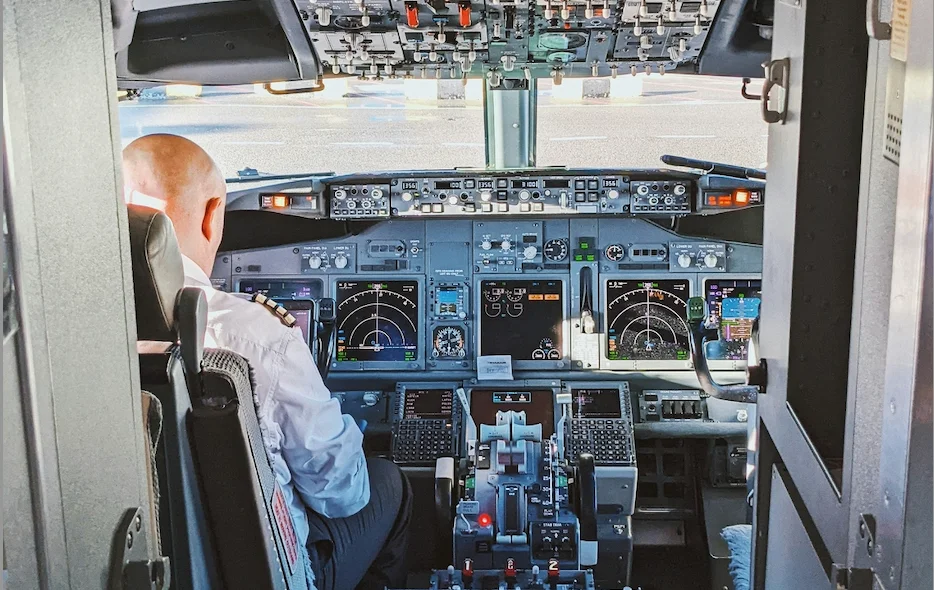
So you've caught the flying bug. You've clocked enough hours in Microsoft Flight Simulator to land a 747 blindfolded (in your imagination, at least), and you're ready to make this dream a reality. But as you start researching pilot licences in Australia, you hit a wall of acronyms: RPL, PPL, CPL, ATPL, MCC, IR… it reads like an aviation alphabet soup.
Don't panic. This guide cuts through the noise and answers the one question that matters most for aspiring career pilots: what's the difference between a CPL and an ATPL, and which one do you actually need?
The Quick Answer (Before We Get Into the Weeds)
CPL (Commercial Pilot Licence) — the licence that lets you get paid to fly. Charter, freight, scenic flights, agriculture, aerial survey — this is your ticket in.
ATPL (Airline Transport Pilot Licence) — the top of the pyramid. The gold standard. The licence required to sit in the left seat of an airliner and command a multi-crew aircraft in air transport operations.
Think of it this way: a CPL is your entry card into professional aviation. The ATPL is the key to the captain's chair.
What Is a CPL? (And What Can You Actually Do With One?)
The Commercial Pilot Licence (CPL), issued by the Civil Aviation Safety Authority (CASA), is the fundamental qualification for a paid flying career in Australia. Under CASR Part 61, the CPL unlocks a world of commercial operations well beyond what a private pilot can legally do.
CPL Privileges
With a CPL in your hand, you can:
Fly for hire or reward — the big one. You can legally accept payment to carry passengers or cargo.
Act as Pilot-in-Command (PIC) of virtually any single-pilot operation, across both VFR and IFR (provided you hold the relevant ratings).
Co-pilot any operation — you can sit right seat in a multi-crew airliner from the day you get your CPL.
Work as a flight instructor (with the addition of a Flight Instructor Rating).
Conduct commercial operations including charter, aerial photography, agricultural flying, freight, and scenic tourism flights.
In short, the CPL is the workhorse licence. It's what most of Australia's regional, charter, and GA pilots hold throughout their careers.
CPL Limitations — Where the Walls Are
The CPL isn't a free-for-all. CASA's regulations set some important boundaries:
You cannot act as PIC in air transport operations of a single-pilot certified aeroplane with a maximum take-off weight (MTOW) exceeding 5,700 kg — unless you have accumulated 750 hours of aeroplane flight time.
You cannot act as PIC of a rotorcraft with an MTOW exceeding 3,175 kg in air transport operations — again, unless you have 750 hours rotorcraft time under your belt.
Crucially, you cannot be the Captain of a large multi-crew airliner on a Regular Public Transport (RPT) operation. That's ATPL territory.
This means that while a CPL pilot can sit right seat in a Airbus A320 and gain invaluable multi-crew experience, they cannot legally command one. Yet.
CPL Requirements: What It Takes to Earn One
CASA's requirements for a CPL are structured but achievable. Here's the breakdown:
Age
You must be at least 18 years old.
Medical Certificate
A Class 1 Medical Certificate is required to sit the CPL flight test. A Class 1 or Class 2 can be used to fly once you're licensed (with Class 2 carrying some operational restrictions). Medical assessments are conducted by a Designated Aviation Medical Examiner (DAME).
Theory Examinations
You must pass seven CASA aeronautical knowledge theory exams, covering:
Air Law
Navigation
Meteorology
Aerodynamics
Aircraft General Knowledge
Human Factors
Flight Operations
These exams are administered through ASPEQ and must be completed within a prescribed timeframe. A mark of 70% or higher is required in each subject.
Flight Hours
This is where training pathways diverge:
Integrated CPL course (CASA-approved 150-hour syllabus): Minimum 150 hours total flight time, including at least 70 hours as Pilot-in-Command (PIC), 20 hours cross-country as PIC, and 10 hours instrument flight time.
Non-integrated course: Minimum 200 hours total flight time, including at least 100 hours as PIC, 20 hours cross-country as PIC, and 10 hours of instrument time.
Pro tip: Most students require more than the minimum. Budget for 165–180 hours in reality. Training with a CASA Part 141 or Part 142 approved flight training operator is mandatory.
Flight Test
A practical flight test with a CASA-approved Testing Officer is the final hurdle. Pass it, and the CPL is yours.
Timeline & Cost
A full-time integrated CPL course typically takes around 12 months to complete. Costs vary by school and aircraft type, but expect to invest $100,000+ for a complete integrated CPL training program in Australia, depending on the provider and location.
For a more details, have a read of our comprehensive breakdown of training costs in Australia. The Complete Cost Breakdown: How Much Does It REALLY Cost to Become a Pilot in Australia in 2026?
What Is an ATPL? (And Why Is It Such a Big Deal?)
The Airline Transport Pilot Licence (ATPL) is the highest level of pilot certification available in Australia — and one of the most demanding qualifications in any profession. It is the only licence that permits a pilot to act as Captain (Pilot-in-Command) of a large multi-crew aircraft in air transport operations — think Virgin, Qantas, Rex, or any RPT operation involving multi-crew jets.
ATPL Privileges
The ATPL is, essentially, an upgrade on everything a CPL gives you, with the critical addition of:
Full Pilot-in-Command privileges on any aircraft, in any operation — including large airline-type aircraft.
Included Instrument Rating privileges for aeroplane ATPL holders — the ATPL(A) subsumes the instrument rating, so you don't need a separate IR.
The ability to fly private, commercial, or air transport operations without restriction.
The freedom to operate as PIC across all airspace classes and operation types.
There are no ceilings with an ATPL. It's the final form.
ATPL Limitations — Yes, Even the Top Licence Has Some
Even with an ATPL, there are operational constraints worth knowing:
If you hold a Class 2 Medical (rather than Class 1), you can still fly commercially, but only as a co-pilot on aircraft that require two pilots.
To conduct single-pilot IFR operations, you must have either passed a flight test for an instrument rating in a single-pilot aircraft, or completed an instrument proficiency check (IPC) in a single-pilot aircraft.
Your ATPL is tied to your aircraft category rating — an ATPL(A) covers aeroplanes; an ATPL(H) covers helicopters. If you want to command both, you need separate category ratings with additional exams, experience, training, and a flight test.
ATPL Requirements: Earning the Top Licence
The ATPL is not something you walk out of flight school with. It is earned through years of professional flying. Here's what CASA requires:
Age
You must be at least 21 years old.
Pre-Requisites
Before you can even apply for an ATPL, you must already hold:
A Commercial Pilot Licence (CPL) with the same aircraft category rating (aeroplane or helicopter).
An Instrument Rating (IR) — for the aeroplane ATPL(A), you'll need a multi-engine command instrument rating.
Medical Certificate
A Class 1 Medical Certificate is required to sit the ATPL flight test.
Theory Examinations
The ATPL theory suite is a significant step up from CPL exams. There are seven advanced theory exams (ATPL-level), covering the same subject areas as the CPL but with considerably greater depth and complexity, particularly in:
Air Law & Regulations (ATPL standard)
Aircraft General Knowledge
Flight Planning & Performance
Meteorology
Human Factors
These are administered through ASPEQ. You must hold a CPL or have passed all seven CPL theory exam subjects before sitting the ATPL theory papers.
Flight Hours — The Big One
This is where patience becomes a virtue. CASA's minimum aeronautical experience for an ATPL(A) includes:
1,500 total flight hours
Of which at least 500 hours must be cross-country flight time
At least 100 hours of night flight time
At least 75 hours of instrument flight time (actual or simulated)
At least 250 hours as Pilot-in-Command
Most pilots accumulate these hours over 3–7 years of professional flying — starting as a flight instructor, building time in charter and regional operations, and gradually working their way up the experience ladder.
Multi-Crew Cooperation (MCC) Course
Before sitting the ATPL flight test, you must complete an approved Multi-Crew Cooperation (MCC) course with a CASA Part 142 flight training operator. This course trains you to operate effectively as part of a flight crew — a critical skillset for airline operations. (Note: CPL holders who already have MCC training may be exempt from repeating it.)
Flight Test
A comprehensive ATPL flight test with a CASA-approved Testing Officer completes the process.
CPL vs ATPL: Head-to-Head Comparison
Feature | CPL | ATPL |
|---|---|---|
Minimum Age | 18 | 21 |
Minimum Flight Hours | 150 (integrated) / 200 (non-integrated) | 1,500 |
Theory Exams | 7 (CPL level) | 7 (ATPL level — more advanced) |
Medical Required | Class 1 (for test) | Class 1 (for test) |
Instrument Rating Required? | No (but highly recommended) | Yes — ATPL(A) includes IR |
MCC Course Required? | No (unless flying multi-crew) | Yes |
Can Fly for Pay? | ✅ Yes | ✅ Yes |
Can Command Airline Aircraft? | ❌ No | ✅ Yes |
Can Co-Pilot Airline Aircraft? | ✅ Yes | ✅ Yes |
Typical Timeline to Achieve | ~12 months (full-time) | 5–8 years from zero hours |
Typical Cost to Achieve | $100,000-$150,000 | $150,000–$300,000+ (career total) |
The Career Path: How They Fit Together
The vast majority of Australian airline pilots follow a path that looks something like this:
RPL/PPL → CPL → Flight Instructor OR Charter/Regional Pilot → Build 1,500 Hours → ATPL
The CPL is your launchpad. It gets you into the industry — working as a flying instructor, flying freight at night, doing aerial survey runs at dawn, or hopping between outback stations in a Cessna Caravan. All of it is real, paid professional flying. All of it counts towards your ATPL hours.
Many pilots spend 3 to 7 years between CPL and ATPL, and that period — often called the "right seat years" — is arguably where you learn the most. It's where textbook flying meets the real world.
The ATPL isn't just a paper qualification. It's the distilled product of thousands of hours of experience, decision-making, and professional growth.
For pilots on an airline cadet pathway (like those offered through Qantas Group or Regional Express cadet programmes), the road is often more structured — but the licences required are exactly the same.
Do You Need an ATPL to Work at a Major Airline?
Short answer: Yes — to sit in the captain's seat. No — to get your foot in the door.
Many Australian regional and major airlines hire first officers (co-pilots) who hold a CPL with a multi-engine instrument rating and MCC training. The ATPL is typically required — or expected to be in progress — when pilots are upgrading to Captain.
Airlines like Rex Airlines, Alliance Airlines, Virgin Australia, and Qantas Group carriers all have defined upgrade pathways from First Officer to Captain that are intertwined with ATPL attainment.
Key Takeaways for Aspiring Australian Pilots
Start with the CPL. It's the essential commercial qualification, and you can't get an ATPL without it anyway.
Add an Instrument Rating (IR) as soon as possible. You'll need it for the ATPL and it dramatically expands your employability with a CPL.
Get your Multi-Engine endorsement early. Airlines want multi-engine experience and it's required for the ATPL(A).
Plan for the long game. The ATPL takes years — and that's not a bug, it's a feature. Those hours make you the pilot airlines trust with 180 passengers.
Choose your training provider carefully. Train with a CASA-approved Part 141 or Part 142 operator to ensure your hours and qualifications are recognised.
Useful Links & Resources
🔗 AviationCareers.com.au — Flight Training Providers in Australia
🔗 AviationCareers.com.au — How to Become a Pilot in Australia — Complete Guide
Frequently Asked Questions
Can I get an ATPL without a CPL? No. Under CASA's CASR Part 61, you must hold a CPL (or MPL) with the same aircraft category rating before applying for an ATPL.
Can I fly for Qantas with just a CPL? You could potentially be hired as a First Officer (co-pilot) with a CPL, multi-engine instrument rating, and MCC course — but you would need an ATPL to upgrade to Captain.
How long does it take to go from zero to ATPL? Realistically, expect 6–10 years from starting training to holding a full ATPL, depending on your pace of hour-building, employment opportunities, and dedication.
Is an ATPL valid internationally? Australian ATPLs are issued in compliance with ICAO standards, meaning they are broadly recognised internationally. However, individual countries may have specific validation or conversion requirements.
What's the difference between ATPL(A) and ATPL(H)? ATPL(A) is for aeroplanes. ATPL(H) is for helicopters. They are separate licences with separate requirements.
Ready to take the next step? Browse current pilot job listings on AviationCareers.com.au or find a CASA-approved flight training school near you and start turning that dream into a logbook.
Disclaimer: Licensing requirements are subject to change. Always verify current requirements directly with CASA before commencing training.