Updated by
Duke is the founder of Aviation Careers. He's Primarily an Airline Pilot in Australia with experience in Charter and Aeromedical operations. He is passionate about improving accessibility for younger generations in aviation and increasing safety throughout the industry.
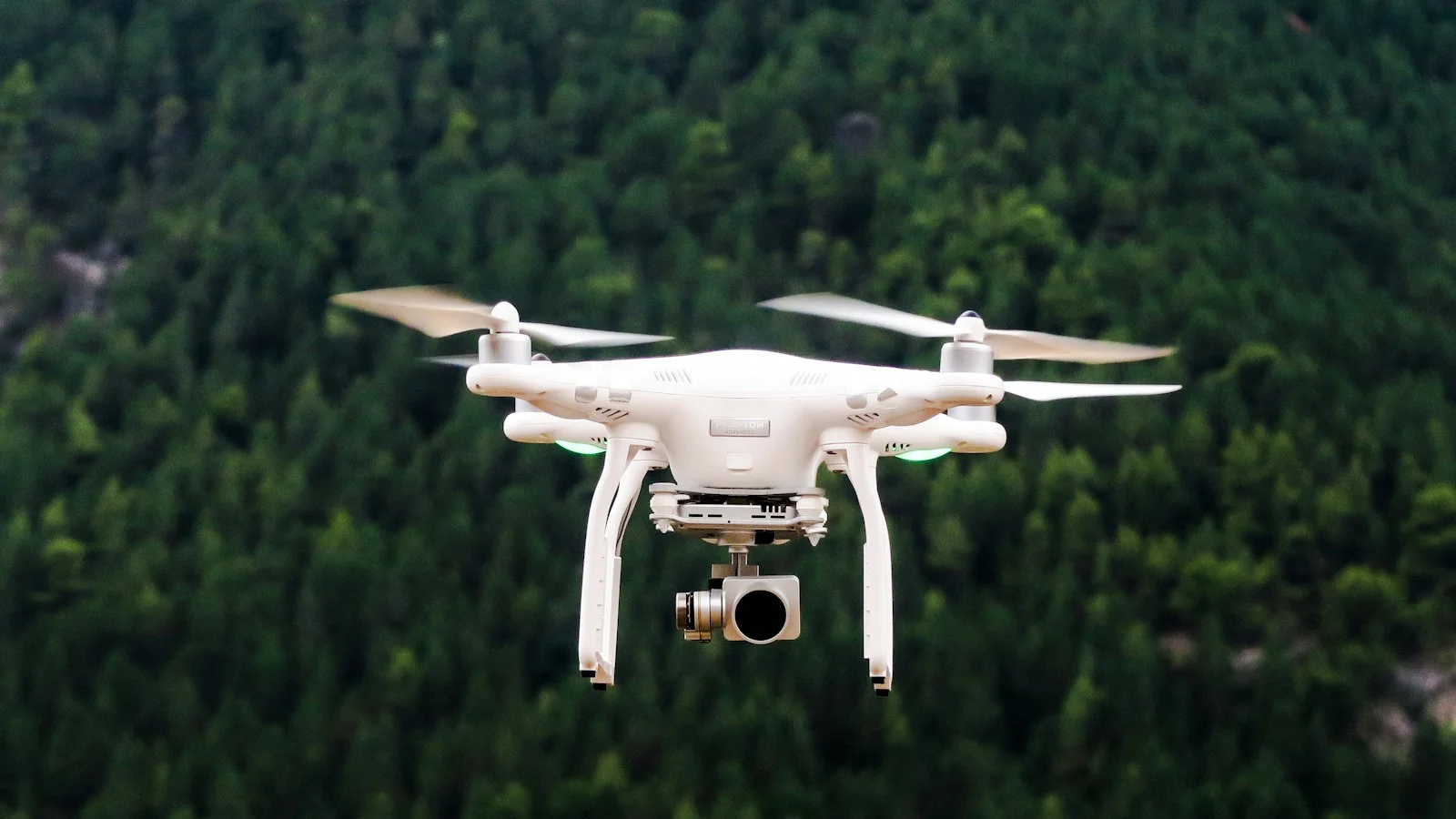
Getting your Remote Pilot Licence feels like the finish line, until you start applying for drone jobs and realise everyone else has one too. Mining companies, surveyors, utilities, agriculture, emergency services and media operators are all hiring remote pilots, but they're looking for more than a licence. They want to know what you've flown, how you work safely, and what you can do with the data once the aircraft is back on the ground.
This guide explains how the licensing system fits together, which industries are hiring and what each of them values, and how to write a drone pilot resume in Australia that stands out, whether you've just finished your RePL or you're running a fleet as Chief Remote Pilot.
How Drone Licensing Works in Australia
Understanding the system helps you describe your own qualifications accurately, and recruiters notice when applicants get it wrong.
- Remote Pilot Licence (RePL): the individual licence. You need one to fly for an organisation that holds a ReOC, and it's the baseline expectation for almost every commercial drone job.
- Remotely piloted aircraft operator's certificate (ReOC): the organisation-level certificate. It's held by the business, not the pilot, and allows more complex commercial operations under an operations manual.
- Chief Remote Pilot (CRP): the person a ReOC holder nominates to oversee its flight operations. A CRP must hold a RePL and be assessed as competent for the role.
- Excluded category and operator accreditation: some lower-risk commercial flying, such as with very small drones under the standard operating conditions, can be done without a RePL or ReOC, provided the drone is registered and the operator is accredited.
- Approvals: operations outside the standard conditions, such as beyond visual line of sight (BVLOS), in controlled airspace near airports, or closer to people, need specific CASA approvals, usually held by the ReOC holder.
On your resume, be precise. Say "RePL (multirotor up to 25 kg)" rather than just "drone licence", and describe approvals as experience you've flown under, not something you personally hold, unless you do.
What Drone Employers Look For
- Licence and categories: your RePL, aircraft categories and weight classes.
- Operational experience: controlled airspace, night, EVLOS or BVLOS operations flown under an operator's approvals.
- Flight hours: total, by aircraft type and in the last 12 months.
- Platforms and software: what you've flown and what you can do with the data afterwards.
- Safety discipline: risk assessments, checklists, logbooks and working to an operations manual.
- Site readiness: the inductions, tickets and fitness for duty that industrial sites demand.
Operators have told CASA they worry about the real-world competency of newly licensed remote pilots. That's exactly why evidence matters more than the licence itself.
Industries Hiring and What They Value
Mining, Surveying and Construction
Volume surveys, stockpile measurement, mapping and progress tracking. Employers value photogrammetry, ground control points, RTK and PPK workflows, LiDAR, and familiarity with mine site safety culture, including site inductions, medicals and drug and alcohol testing. A surveying, spatial or civil background is a big advantage.
Utilities, Energy, Telecommunications and Infrastructure Inspection
Powerlines, towers, wind turbines, solar farms, bridges and roofs. Employers want close-proximity flying skills, thermal imaging, a methodical approach to capturing defects, and clear inspection reporting. Experience working around live assets and high-risk environments is valued.
Agriculture
Crop monitoring, mapping and, increasingly, spraying and spreading with larger drones. Spray work brings extra requirements such as chemical handling accreditation and state-based rules, alongside the aviation side. A farming background and a practical attitude go a long way.
Emergency Services and Public Safety
Search and rescue, fire mapping, police and incident support. Expect strong emphasis on night operations, thermal sensors, working under pressure and team communication.
Media, Film and Real Estate
Smooth, cinematic flying, camera and editing skills, and an excellent understanding of airspace and people-related restrictions in built-up areas.
Remote Operations and Automated Systems
Some operators now run remote operations centres with drone-in-a-box systems, where a pilot in one city supervises flights on the other side of the country. These roles favour people who are strong with software, monitoring and procedures as well as flying.
Section by Section
Professional Summary
"Commercial remote pilot with 450 hours on multirotor and fixed-wing VTOL platforms, specialising in mine site survey and stockpile reporting. Experienced flying in controlled airspace and under BVLOS approvals, with strong photogrammetry and LiDAR processing skills."
Licences and Approvals
- Remote Pilot Licence (RePL) and ARN
- Categories and weight classes (multirotor, aeroplane, helicopter; for example up to 7 kg, up to 25 kg, over 25 kg)
- Aeronautical radio operator qualification
- Experience under specific approvals: night, EVLOS, BVLOS, controlled airspace
- Certificate III in Aviation Remote Piloting (AVI30426), or the predecessor qualification (AVI30419), if held
- Any crewed pilot licence (it's a genuine advantage)
- Industry tickets: White Card, working at heights, site inductions, first aid, chemical accreditation for spray work
Flight Hours Table
Just like a crewed pilot resume, a short hours table makes you easy to assess: total RPAS hours, multirotor, fixed wing or VTOL, night, BVLOS or EVLOS, and last 12 months. Keep your logbook accurate and up to date, because a good employer will ask to see it.
Platforms and Software
List the aircraft you're current on and the software you use for planning and processing: photogrammetry, mapping, thermal, LiDAR and GIS tools. For many employers, the data skills are as valuable as the flying. A pilot who can fly a mission and deliver a clean orthomosaic or a clear inspection report the same day is worth a lot more than one who can only fly.
Experience Bullet Points
- Plan and fly survey, mapping and inspection missions for mining, construction and utilities clients.
- Complete JSAs, risk assessments, NOTAM checks and airspace approvals before every operation.
- Process imagery into orthomosaics, 3D models and inspection reports.
- Deliver stockpile volume reports within 24 hours of capture, accurate to client survey tolerances.
- Maintain RPAS logbooks, battery records and maintenance in line with the operator's manual.
If You've Just Got Your RePL
Most new remote pilots have limited commercial hours. Strengthen your resume by:
- Logging every training and practice flight properly.
- Building a small portfolio, such as farm mapping, inspections or imagery, flown within the rules. Only include work you flew legally.
- Highlighting your background. Surveying, construction, agriculture, photography, IT, trades and engineering all transfer well.
- Adding a mapping, thermal or GIS short course.
- Getting the industry tickets your target sector expects before you apply.
Many drone jobs are really "surveyor who flies drones" or "inspector who flies drones" jobs. If you already have that industry skill, lead with it.
Building Hours the Right Way
The biggest hurdle for new remote pilots is the gap between licence and paid experience. A few legitimate ways to close it: offer to assist an established operator as a visual observer or second pilot, which still builds site and operational experience; fly regular practice sessions in open, legal locations and log them properly; take on small paid jobs that genuinely fit the excluded category or standard operating conditions; and look for entry roles in survey, inspection or agriculture businesses where flying is part of a broader job. Whatever you do, keep the logbook clean and honest. Employers often ask about your recent hours in interview, and a well-kept logbook builds instant trust.
Show Your Safety Culture
Commercial drone work happens on mine sites, construction sites, farms and near critical infrastructure, where safety culture is taken seriously. Recruiters want to see that you plan before you fly, use checklists, stop when conditions aren't right, and report incidents. A line such as "Cancelled or postponed operations when wind, weather or site conditions exceeded limits" is a strength, not a weakness. If you've contributed to an operations manual, a risk register or a safety investigation, include it.
Expect a Practical Assessment
Many employers include a flight assessment or practical test, and some ask you to talk through a mission plan for a realistic job. Be ready to explain how you'd check the airspace, assess the site, brief the client and crew, handle a lost link or flyaway, and process the data afterwards. If you're applying for a data-heavy role, you may be asked to process a sample dataset.
Chief Remote Pilot and Senior Roles
For senior positions, emphasise responsibility: accountability for flight operations under the ReOC, writing and maintaining the operations manual, securing CASA approvals for complex operations, training and checking pilots, managing maintenance and fleet records, and running client programs. Show the scale: number of pilots, aircraft, sites and flight hours under your oversight.
Pay and Ways of Working
Drone work is a mix of salaried roles with larger operators and industrial companies, contract and day-rate work, and self-employment under your own ReOC. Specialist skills such as LiDAR, BVLOS, inspection of high-value assets and mine site experience tend to command higher pay. If you're contracting, keep your resume tightly focused on the specific type of work each client buys.
Cover Letter Tips
Drone operators are often small businesses, and a short, specific cover letter gets read. Name the company and the type of work they do, then match your experience to it: if they do mine survey, talk about survey; if they do powerline inspection, talk about inspection. Mention your hours, the platforms you're current on and one example of a job you planned and delivered from start to finish. Finish by confirming your availability for travel and remote work, which is common in this industry. Our aviation cover letter guide has the full structure.
Mistakes to Avoid
- Leading with the drone you own. Employers care about what you can deliver, not your personal kit.
- Vague hours. "Lots of flying experience" means nothing. Give numbers from your logbook.
- Portfolio work that breaks the rules. Footage flown over crowds or in restricted airspace will hurt you, not help you.
- Ignoring the data. If you can process and report, make it as prominent as the flying.
- Overstating approvals. Approvals belong to the operator. Describe the operations you've flown under them.
- Forgetting the industry tickets. Missing site inductions or a White Card can rule you out of industrial work.
Keywords to Include
Remote Pilot Licence (RePL), ReOC, Chief Remote Pilot, RPAS, CASR Part 101, BVLOS, EVLOS, night operations, controlled airspace, photogrammetry, mapping, inspection, thermal, LiDAR, RTK, PPK, GIS, risk assessment, JSA, operations manual.
Prefer to start from a template? Our drone pilot resume templates include versions for commercial remote pilots, new RePL holders and Chief Remote Pilots, with a flight hours table and licence sections ready to fill in.
Frequently Asked Questions
Do I need a RePL to get a drone job?
For most commercial work, yes. Some lower-risk excluded category operations with small drones don't require one, but employers almost always expect it.
Is a RePL or a Certificate III in Aviation Remote Piloting better?
The RePL is the minimum to work as a remote pilot under a ReOC. The current Certificate III in Aviation Remote Piloting (AVI30426) aligns with CASA’s licensing requirements, but it is a separate qualification, not a licence. Check how your provider handles the RePL assessment and application. The coursework can help if you have no other relevant background.
Does a crewed pilot licence help?
Yes. It shows airmanship, airspace knowledge and radio skills. Our CPL vs ATPL guide covers crewed licences if you're considering one.
What industries hire drone pilots in Australia?
Mining, surveying, construction, utilities, agriculture, emergency services, media and infrastructure inspection are the biggest.
Are the drone rules changing?
Yes, regularly. CASA has reforms to Part 101 in progress, including changes for small drones and plans for Remote ID. Keep up to date and mention relevant recent training on your resume.
Ready to Apply?
Browse drone and RPAS jobs on Aviation Careers. For a structure built around RePL details and flight hours, see our drone pilot resume and cover letter templates.
Further Reading
→ Your Complete Guide to Pilot Ratings and Endorsements in Australia
→ CPL vs ATPL: Which Pilot Licence Do You Actually Need?
→ How to Write a Pilot's Resume in 2026
→ Is Your Aviation Resume ATS-Friendly?
→ How to Write an Aviation Cover Letter That Actually Gets Read
Drone rules change regularly. Always check current requirements on the CASA drones website.
Last updated: November 2026
Related posts

How aviation employers may use applicant tracking systems, and how to make your resume easier for both software and recruiters to read.
How to write an aviation safety and compliance resume in Australia, including moving across from pilot, engineering or cabin crew roles.
How to write a resume and cover letter for Aviation Rescue Fire Fighting recruit intakes, transfers and Station Officer roles in Australia.