
Updated by
Duke is the founder of Aviation Careers. He's Primarily an Airline Pilot in Australia with experience in Charter and Aeromedical operations. He is passionate about improving accessibility for younger generations in aviation and increasing safety throughout the industry.
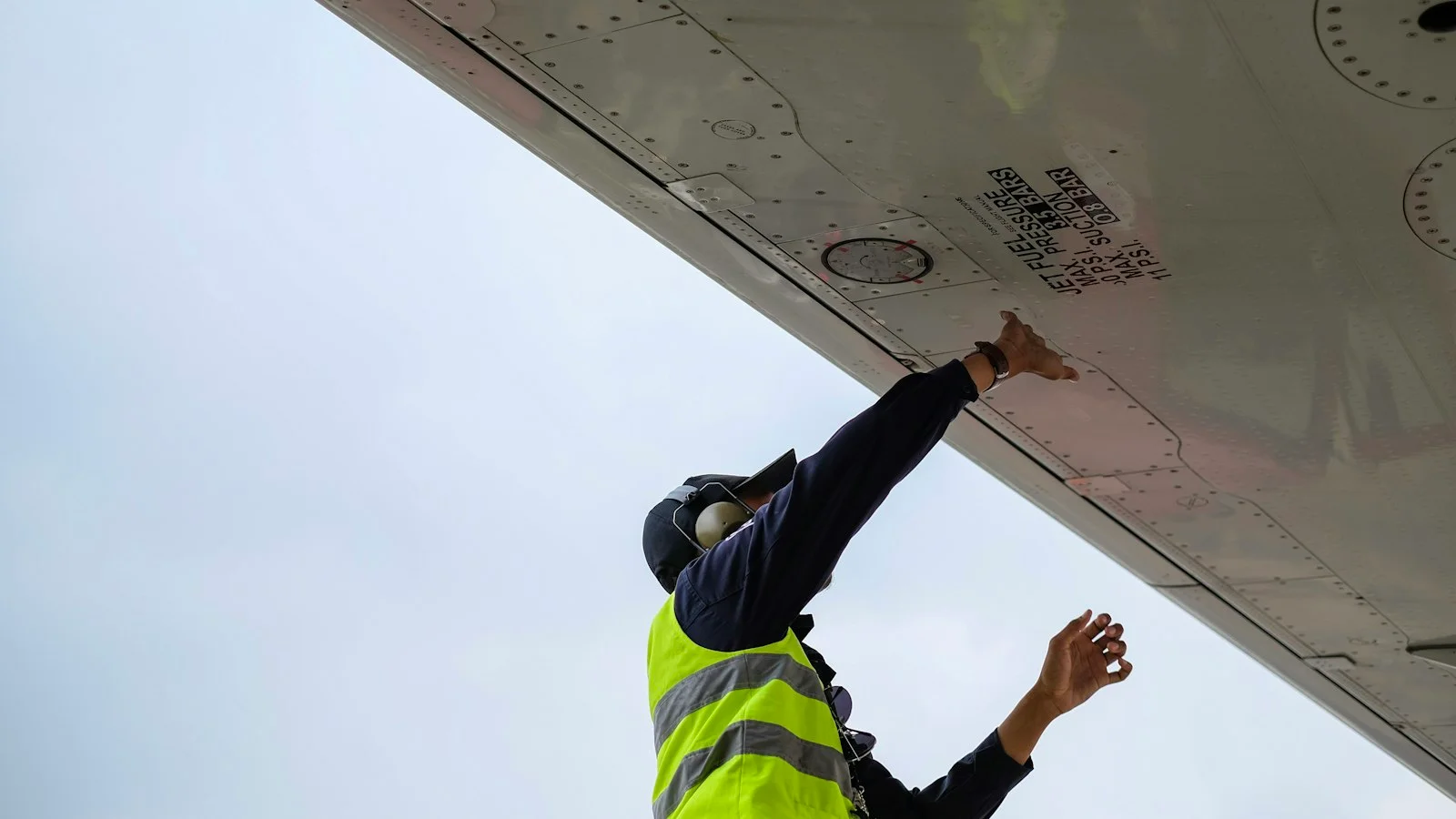
If you're a licensed aircraft maintenance engineer, your resume has a very specific job: it needs to show a maintenance manager, in under a minute, exactly what you're licensed and authorised to certify. Everything else is secondary.
And yet most LAME resumes we see bury the licence details halfway down page two, list "hydraulics" as a skill without context, or forget the authorisations that actually make an engineer valuable on shift. If you're an apprentice, the problem is the opposite — you're not sure what to put on the page at all.
This guide covers how to write an aircraft maintenance engineer resume in Australia, from first apprenticeship application through to senior B1 and B2 licensed roles. No fluff — just what maintenance managers and MRO recruiters look for.
What Maintenance Managers Look For First
Whether it's an airline line maintenance department, a heavy maintenance MRO or a GA workshop, the first questions are the same:
- What licence do you hold? CASA Part 66 category (B1.1, B1.2, B2, C or Category A) and licence number.
- What can you certify? Type ratings and any exclusions still on your licence.
- What are you authorised to do? Part 145 certification authorisations plus special authorisations — run-up and taxi, borescope, fuel tank entry, EWIS and so on.
- What environment have you worked in? Line, base, avionics, heavy checks, GA, defence.
Put these on the first half of page one. If a manager has to hunt for them, you've lost them. For background on licence categories and the pathway into the trade, see our Aircraft Maintenance Engineer Career Guide.
Where Aircraft Maintenance Engineers Work in Australia
The same licence can lead to very different jobs, and your resume should be tailored to the one you're applying for:
- Airline line maintenance: fast-paced turnaround and overnight work at major airports, with a focus on defect rectification, MEL and on-time departures.
- Base and heavy maintenance (MROs): scheduled checks, structural repairs, modifications and component changes in a hangar environment.
- Regional and charter operators: broader roles where a small team looks after a turboprop or light jet fleet, often with more variety and responsibility.
- General aviation: piston and light turbine aircraft, inspections, overhauls and avionics installs in smaller workshops.
- Helicopters: offshore, aeromedical, firefighting and utility operations, often with FIFO or remote rosters.
- Defence: civilian roles with defence contractors supporting military fleets, usually with extra security clearance requirements.
- Component and engine shops: specialist workshop roles in engines, avionics, wheels and brakes, and other components.
Line maintenance managers want to see speed, troubleshooting and documentation under time pressure. Heavy maintenance managers want structures, task-card discipline and big-check experience. GA employers value versatility and hands-on skill across many aircraft types.
Part 66 Licence Categories at a Glance
CASA's Part 66 licence has four categories, and using the exact terms on your resume shows you know your trade:
- Category A: line maintenance certifying mechanic, for limited tasks, with subcategories by aircraft type.
- Category B1: maintenance certifying engineer (mechanical), covering structures, powerplant and mechanical and electrical systems. Subcategories are B1.1 turbine aeroplanes, B1.2 piston aeroplanes, B1.3 turbine helicopters and B1.4 piston helicopters.
- Category B2: maintenance certifying engineer (avionics), covering avionics and electrical systems on all aircraft.
- Category C: base maintenance certifying engineer for large aeroplanes.
CASA has also introduced a modular licensing option, which lets engineers gain a licence sooner with exclusions and remove them over time, along with a self-study training and exam pathway. If you're on one of these pathways, show clearly which modules and exclusions apply so an employer can see exactly what you can certify today.
The Best Format for an AME Resume
- Length: One page for apprentices and early-career engineers. Two pages is fine for experienced LAMEs with multiple types.
- Layout: Clean and simple. Many engineering roles are applied for through airline and MRO portals that use ATS screening, so avoid tables and graphics for important details.
- Paper: A4, PDF, Australian spelling.
Section by Section: What to Include
1. Professional Summary
Three or four lines covering your licence category, years of experience, main aircraft types and the type of maintenance you do.
"CASA Part 66 B1.1 LAME with eight years' experience in airline line and base maintenance on the A320 family (CFM56/IAE V2500) and B737NG. Holds run-up, taxi and borescope authorisations with a strong focus on human factors, accurate documentation and on-time departures."
2. Licence and Type Ratings
Make this its own clearly labelled section. Include:
- CASA Part 66 licence number and category
- Each type rating, including engine variants where relevant
- Exclusions removed (or remaining)
- Part 145 certification authorisation and the organisation
3. Special Authorisations
This is the section that separates a good engineer from a great hire. Authorisations take time and money to gain, so list every current one: engine run-up, taxi, towing and pushback, borescope, NDT methods, fuel tank entry, fuel tank safety (including CDCCL), EWIS, compass swing, software loading — whatever applies.
4. Experience
For each role, include the organisation, location, dates and three to five bullet points. Focus on what you certified, what you troubleshot and the results you contributed to.
Weak: "Responsible for maintenance of aircraft."
Strong: "Certified line maintenance, transit and daily checks on A320 family aircraft; rectified defects using AMM, IPC, TSM and MEL to minimise AOG time."
More examples you can adapt:
- Troubleshot hydraulic, landing gear, pneumatic and powerplant defects, supporting 99%+ technical dispatch reliability on shift.
- Supervised and signed off work by apprentices and Category A staff; maintained accurate tech log and work package records in AMOS.
- Performed C-check tasks including component changes and structural repairs to approved data.
- Led a shift team of six, planning workload and coordinating with maintenance control to release aircraft on time.
Show Results Where You Can
Maintenance managers respond to outcomes. If you reduced a repeat defect, improved a check's turnaround time, found a significant structural issue, or trained apprentices through to licence, say so with numbers. For example: "Identified the root cause of a recurring bleed air fault affecting three aircraft, eliminating 11 related delays over the following quarter." One line like that makes your experience concrete and memorable.
Avionics and GA Examples
For B2 avionics engineers:
- Troubleshot and rectified avionics, autoflight, communication and navigation defects using wiring diagrams, BITE and fault isolation manuals.
- Performed software loading, database updates and avionics modifications to approved data.
- Carried out EWIS inspections and wiring repairs in line with standard practices.
For GA engineers:
- Completed periodic inspections, engine changes and overhauls on piston and light turbine aircraft from a wide range of manufacturers.
- Installed and tested avionics upgrades, completing weight and balance amendments and documentation.
- Liaised directly with owners and operators on defects, quotes and turnaround times.
5. Training
Recurrent human factors, fuel tank safety, dangerous goods, confined space and working at heights. Recruiters check these are current.
6. Education
Your Aeroskills qualification (e.g. Diploma of Aeroskills MEA50219 or MEA50118), Part 66 modules completed, and any trade background.
Writing an Apprentice or Graduate Resume
If you're applying for an aircraft maintenance apprenticeship, nobody expects a licence. What employers want to see is mechanical aptitude, safety awareness, and evidence you'll follow procedures carefully. Include:
- Your Aeroskills study (Certificate II, III or IV) and any Part 66 basic modules passed
- Maths and physics at Year 12
- Any hands-on work — automotive, trade assistant, workshop, farm machinery, even a car you rebuilt
- Work experience at a maintenance organisation, however short
- Driver licence, forklift licence and first aid
A line like "Assisted LAMEs with 100-hourly inspections, wheel and brake changes and oil servicing on Cessna and Piper aircraft, using torque tools and safety wire to approved data" is worth far more than a list of soft skills.
If You Hold an Overseas Licence
Engineers with EASA, UK, FAA or other foreign licences are common in Australian hangars, and CASA has a process for converting a foreign licence to an Australian Part 66 licence. On your resume, list your foreign licence and categories, your type experience, and exactly where you are in the conversion process, for example which exams you've passed. Employers want to know when you'll be able to certify in Australia, so don't make them guess. Include your work rights too.
The Interview and Technical Assessment
Many engineering interviews include technical questions, and some include a practical or written test. Expect to talk through how you'd troubleshoot a recurring defect, how you'd use the MEL to dispatch an aircraft, and how you'd handle a human factors scenario, such as finding a problem at the end of a long night shift with pressure to release the aircraft. Interviewers want to hear that you follow approved data, document everything, ask for help when you need it, and never sign for work you haven't done or can't verify. Be ready to back up every type rating and authorisation on your resume with real examples.
Rosters, Pay and Progression
Line maintenance runs around the clock, so expect rotating day and night shifts, while base maintenance is often more predictable. Helicopter, mining and remote roles can be FIFO with swing rosters and allowances. Pay depends heavily on your licence category, type ratings and authorisations, which is exactly why they belong at the top of your resume. The usual progression runs from apprentice to Category A or unlicensed engineer, then B1 or B2 licensed engineer, shift supervisor or lead engineer, and on to maintenance control, technical services, planning, quality or management roles. If you're aiming for the next step, show the leadership, training and planning work you already do. Our aviation jobs salary guide has more on pay.
Keywords That Help You Get Shortlisted
Match the language in the job ad where it's true for you. Common AME keywords include: CASA Part 66, B1, B2, LAME, type rating, Part 145, certification authorisation, line maintenance, base maintenance, AMM, IPC, MEL, troubleshooting, human factors, EWIS, CDCCL, run-up, borescope, AMOS, TRAX, AOG, airworthiness.
Common Mistakes on Engineering Resumes
- Licence details buried or missing. Your licence is your headline. Lead with it.
- Listing types you're not rated on as if you are. Be precise: "experience on" is different to "type rated on".
- Forgetting authorisations. Run-up, borescope and fuel tank entry can be the difference between two candidates.
- Generic duty lists. Show what you certified, fixed and improved.
- Out-of-date training. If your human factors or fuel tank safety is current, say so with dates.
Prefer to start from a template? Our aircraft maintenance engineer resume templates include versions for licensed B1 engineers, apprentices and senior B2 avionics engineers, with dedicated sections for licence categories, type ratings and authorisations already laid out.
Frequently Asked Questions
Should I include my CASA licence number on my resume?
Yes. Employers will verify it, and including it shows you have nothing to hide and makes their job easier.
How do I show experience on a type I'm not yet rated on?
List it in your experience section as work performed under supervision (e.g. "Performed maintenance tasks on ATR 72 under supervision of B1 LAME"), not in your type rating section.
Do I need a cover letter for engineering jobs?
Often, yes — and it's a great place to explain why you want to work on a particular fleet or move into a supervisory role. Our aviation cover letter guide walks through the structure.
Is two pages too long for a LAME resume?
Not for experienced engineers with multiple types and authorisations. Keep apprentice and early-career resumes to one page.
Ready to Apply?
Engineers are in demand across Australian airlines, MROs and GA operators, and a clear, well-organised resume gets you to the interview faster. Browse current aircraft maintenance engineer jobs on Aviation Careers, and if you want the formatting handled, our engineering resume and cover letter templates are ready to go.
Further Reading
→ Aircraft Maintenance Engineer Career Guide: Qualifications, Salary & Jobs
→ Aviation Jobs Salary Guide 2026
→ How to Get an ASIC Card in Australia
→ Graduate Programs in Aviation
For current licensing requirements, refer to CASA's aircraft maintenance engineer licence information.
Last updated: November 2026
Related posts

How aviation employers may use applicant tracking systems, and how to make your resume easier for both software and recruiters to read.
How to write an aviation safety and compliance resume in Australia, including moving across from pilot, engineering or cabin crew roles.
How to write a resume and cover letter for Aviation Rescue Fire Fighting recruit intakes, transfers and Station Officer roles in Australia.